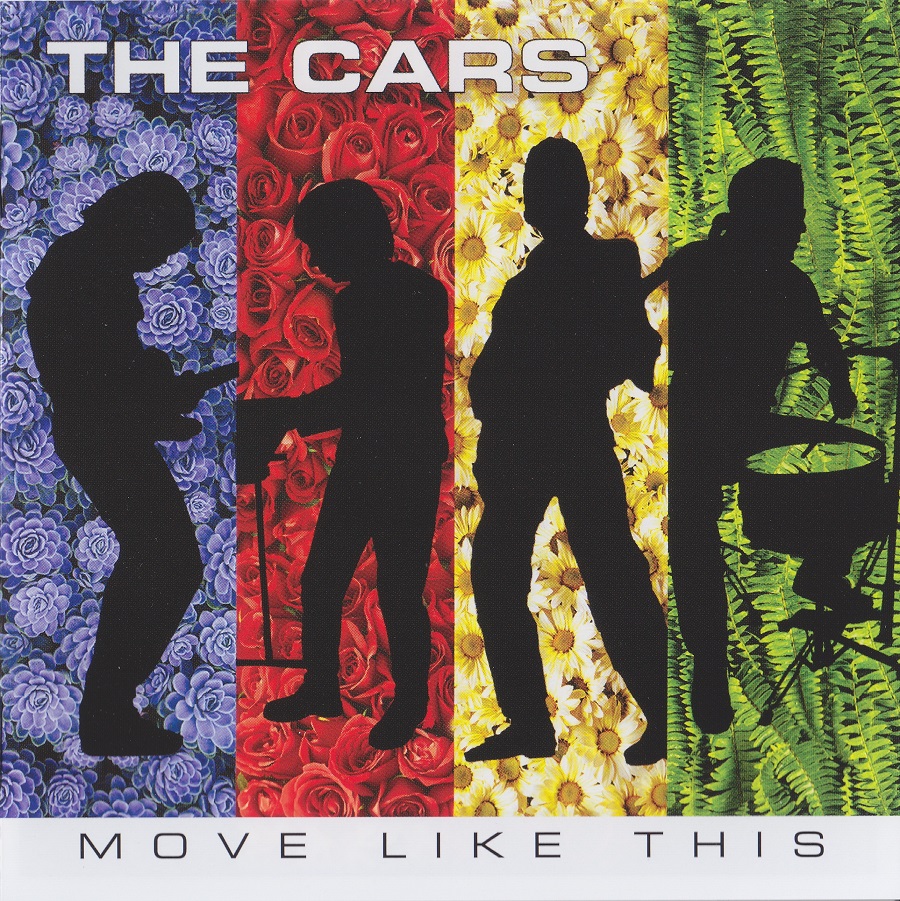
Move Like This is the seventh studio album by American rock band The Cars, released on May 10, 2011. The album is their first since 1987's Door to Door and the first without bassist and vocalist Benjamin Orr, who died of pancreatic cancer in 2000. The album reached the top ten of the Billboard 200 and peaked at number 2 on the Billboard Top Rock Albums chart; a single from the album, "Sad Song", reached number 33 on the Billboard Rock Songs chart. Following the release of the album, the band launched an 11-city tour of North America.
Move Like This is the first reunion of The Cars to feature original lead singer, songwriter, rhythm guitarist, and co-producer Ric Ocasek since their 1988 split. In 1997, Ocasek told a journalist that the band would never reunite: "I'm saying never and you can count on that." A partial reunion of the band occurred in 2005 when keyboardist Greg Hawkes and lead guitarist Elliot Easton toured with singer Todd Rundgren, drummer Prairie Prince and bassist Kasim Sulton as "The New Cars"; neither Ocasek nor Cars drummer David Robinson participated, and the Rundgren lineup split following two years of touring.
According to Paste magazine, Ocasek said that he was "amazed at how we clicked when we got back together." Exclaim! has noted that The Cars' Facebook page featured a picture of producer Jacknife Lee, "which suggests that he will be producing the new album." According to Rolling Stone, Lee produced five of the songs from the album; The Cars themselves produced the others.
The Cars did not add a new bassist to the lineup to replace Orr; instead, the album's bass parts were programmed or performed by Hawkes and Lee, with Hawkes playing a bass once owned by Orr.] While Ocasek and Orr split vocal duties on past albums, Ocasek sings lead on all the tracks from Move Like This. In a Rolling Stone interview, Ocasek said, "I was aware that on half of the new songs, Ben would have done better than I did. But we never wanted anybody from the outside." Orr was given special thanks in the liner notes: "Ben, your spirit was with us on this one."
According to Billboard, the album was recorded in engineer Paul Orofino's studio in Millbrook, New York. Additional recording sessions were held in Los Angeles. The title of the album comes from a line in the song "Too Late"; one of the working titles for the album was Sharp Subtle Flavor. Ocasek decided to title the album Move Like This as a reference to the band's reputation for not moving around very much onstage.
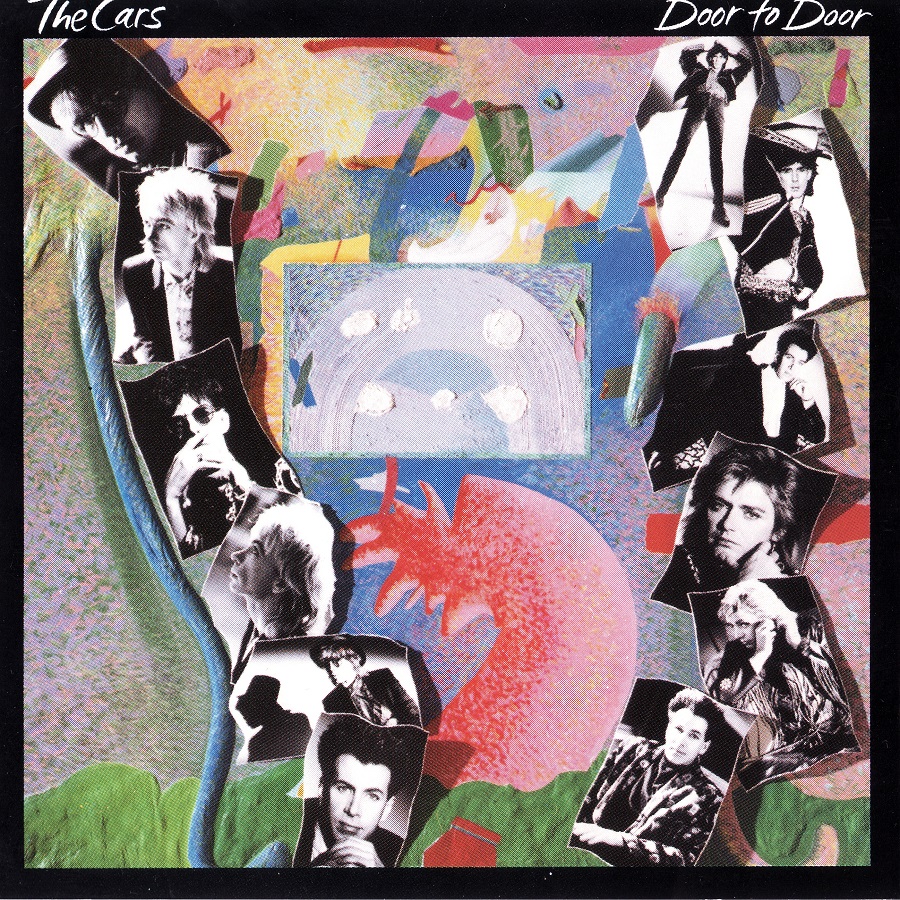
Door to Door is the sixth studio album by the American rock band The Cars. It was released in 1987 on Elektra Records.
Door to Door was the group's last studio album before they disbanded in 1988. It was also the last Cars record to feature Benjamin Orr before his death in 2000. The band would not release another studio album until 2011's Move Like This.
Although by 1987 the Cars had reached the heights of superstardom, their last few albums had relied heavily on studio tricks and machines; this album was an attempt to move back to the group's original roots. For example, where the previous album, Heartbeat City, extensively used sampled and sequenced drums (a move that had somewhat alienated drummer David Robinson), this album returned to having Robinson performing the drums in the studio, often simultaneously with other members.
During a writing jam session, the band began to play "Ta Ta Wayo Wayo", a song from their earliest days together. It had never been recorded in the studio, except as a demo in 1977. They enjoyed the tune so much that the 1987 version of the song made it onto the album. The opening track, "Leave or Stay", also was originally a 1977 demo that was not properly recorded until Door to Door. Both tracks had their respective 1977 demo versions eventually issued on the 1995 compilation Just What I Needed: The Cars Anthology.
While the original album bears the credit "Produced by Ric Ocasek", individual tracks from this record that appear on various Cars compilations bear the credit "Produced by Ric Ocasek and Greg Hawkes".
The lead single of the album "You Are the Girl" reached no #17 on the Billboard 100 as well as reaching number #2 on the rock charts. The follow up single "Strap Me In" only scraped into the top 100 peaking at #85 though it was much more successful on the rock charts where it reached #4. The final single released "Coming Up You" peaked at 74 on the charts and was also a moderate hit on the adult contemporary charts.
Heartbeat City is the fifth studio album by American rock band the Cars. Released in 1984, it was produced by Robert John "Mutt" Lange. Picking up a positive commercial response, the Cars had many tracks getting airplay, and singles "Drive" and "You Might Think" in particular both became Top 10 hits. The album also received supportive reviews from several critics; for example, Robert Christgau stated that "the glossy approach the Cars invented has made this the best year for pure pop in damn near twenty, and it's only fair that they should return so confidently to form."
Heartbeat City contains five American Top 40 singles. Of these, "Drive" and "You Might Think" were also Top 10 hits, reaching the No. 3 and No. 7 positions, respectively. A number of songs from the album gained significant radio and TV exposure; most notably "You Might Think" and "Magic", which both received heavy airplay on MTV.
The lead vocal on "Drive" was performed by bassist Benjamin Orr. The song's video was directed by actor Timothy Hutton. It features Ric Ocasek arguing with a troubled young woman played by model Paulina Porizkova (whom Ocasek would later marry). "Hello Again" had a video directed by the legendary Andy Warhol, who also appeared onscreen.
The single "It's Not the Night" reached No. 31 on the rock charts. The song "Stranger Eyes" was used in the theatrical trailer of the 1986 film Top Gun, but it never made it into the soundtrack. "Looking for Love" was later covered by Austrian singer Falco as "Munich Girls" on his 1985 album Falco 3.
When the Cars performed at Live Aid, they played three songs from the album ("You Might Think", "Drive", plus the album's title track) alongside the fan favorite "Just What I Needed".
The album was produced by Robert John "Mutt" Lange. His commitment to the Cars album meant that he told Def Leppard he could not work on their album, Hysteria. However, due to delays in that album's recording, Lange was eventually able to produce it.
The cover art (including an image of a 1971 Plymouth Duster 340) is from a 1972 piece by Peter Phillips called Art-O-Matic Loop di Loop.
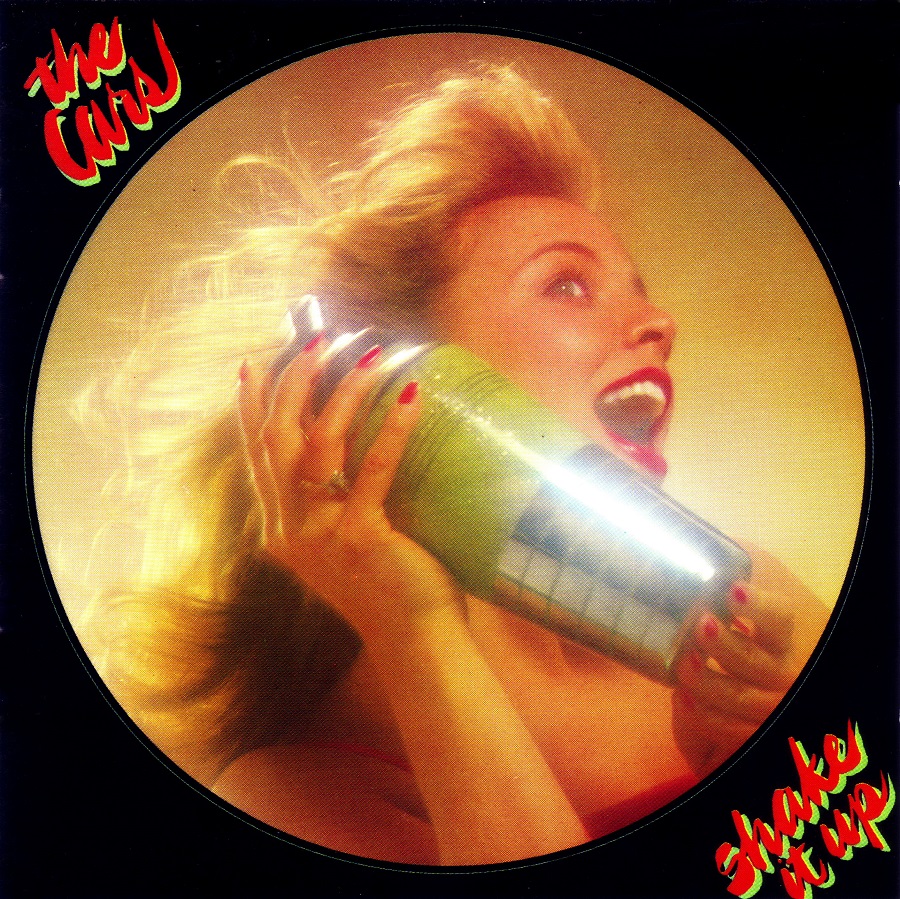
Shake It Up is the fourth studio album by American rock band The Cars, released in 1981. It was the last album by the Cars to be produced by Roy Thomas Baker. A much more pop-oriented album than its predecessor, its title track became their first Billboard top ten hit.
Panorama is the third studio album by American new wave band the Cars, released in 1980.
The record marked a change from the upbeat pop rock and hard rock of the group's previous albums, representing a more aggressive and experimental sound. It was not as commercially successful as the Cars' previous or subsequent albums (until 1987's Door to Door). However, it did hit No. 5 on the Billboard 200 chart and has been certified platinum by the RIAA.
As a single off the album, the song "Touch and Go" peaked at #37 on the Billboard Hot 100.
Candy-O is the second studio album by the American rock band the Cars. It was released in 1979 on Elektra Records. Featuring the Top 20 hit "Let's Go" and the minor hit "It's All I Can Do", the album charted 15 places higher than its predecessor on the Billboard Hot 100. The album features cover art by pin-up artist Alberto Vargas.
Unlike the first album, Candy-O was created under a more democratic approach. Ric Ocasek said of this, "When one of my songs goes to the band in barest cassette form, we sit around and talk about it. If I'm outvoted, we don't do it. We almost didn't include 'Double Life' on the new album, it had been dropped. I think everybody in the Cars is open-minded and creative enough that they would do anything – nobody's holding anything back. Everybody appreciates the more radical, experimental kinds of music and likes it. But sometimes, when you're put together with five pieces, things are not as minimal as they could or should be. Everybody's developed a unique personal style, and we rely on their input. If they did it, it's good enough."
Most of the songs on Candy-O were written after the release of The Cars, meaning that most of the leftovers from the first album (including the popular encore "Take What You Want") were scrapped; "Night Spots", a reject from the first album, was still included.
For the album, the band once again worked with Queen producer Roy Thomas Baker. Ocasek said of their relationship with the producer, "Well, some of the things on that first album that we thought were a little slick, we toned down on the second, like on the background vocals. But if we were going to rely on the producer we had hired, there was no reason to try and change him. On the second album, it was easier to say, 'Roy, let's not do the multi-tracked harmonies this time.'"
The band's label, Elektra, initially wanted to hold back the release of the album, but the band stood their ground. Ocasek said of this, "At first Elektra wanted to hold it back some, but we told them there was no way, because if they were going to hold that back, they were going to hold us back, and we can't just sit around and be held back." Released as the follow-up to their 1978 hit album The Cars, Candy-O peaked at No. 3 on the Billboard 200. The album re-entered the charts at No. 179 in 1984. The record was also ranked number 82 on Billboard's "Top Albums of the Year" chart for 1979.
Three singles were lifted from Candy-O: "Let's Go" hit No. 14, making it the first Top 20 Cars single, "It's All I Can Do" peaked at No. 41, barely missing the Top 40, and "Double Life" failed to chart.
The album cover was painted by artist Alberto Vargas, who was known for his paintings of pin-up girls that appeared in Esquire and Playboy magazines in the 1940s through the 1960s. The idea to hire Vargas came from drummer David Robinson, the band's artistic director and a collector of pin-ups. The 83-year-old Vargas had retired several years earlier but was persuaded to take the assignment by his niece, who was a fan of the Cars. The painting, depicting a woman sprawled across the hood of a car, was based on a photo shoot directed by Robinson at a Ferrari dealership. The model, coincidentally named Candy Moore (famous for having played Lucille Ball's onscreen daughter on The Lucy Show), briefly dated Robinson afterward.