lunes, 30 de septiembre de 2019

Orchestral Manoeuvres In The Dark (OMD) "The Best of OMD"

The Best of OMD is a compilation album by Orchestral Manoeuvres in the Dark, released in 1988.

The record essentially delineates the group's experimental early years from their pop-oriented later work: side one features recordings from 1979–1984, while side two is drawn from the group's 1984–1988 efforts. It was a worldwide success, becoming a Top 5 hit across Europe and achieving 3x platinum sales in the United Kingdom and gold status in the United States. "Dreaming" was released as a single and made little impact on the UK charts, reaching no. 50, but it was a hit in the US (no. 16), Germany (no. 26) and South Africa (no. 2).

The version of "Electricity" used is the same as the one featured on their debut album (which itself is the band reworking Martin Hannett's original Factory version). The band was originally going to use their very first version of this song, but found the drumming to be inferior and so settled for the remix of the track instead. "Messages" is the more popular 10" single version; "Tesla Girls" is a compilation version not previously released; and "Talking Loud and Clear" is the 7" edited version.

The worldwide CD, MiniDisc and DCC versions of the album are resequenced and feature four extra tracks not present on the LP version: "Telegraph" (a unique mix found only on this release, differing from the album version and both 12" versions), "Genetic Engineering", and 12" versions of "La Femme Accident" and "We Love You". The US CD adds only the latter two 12" versions. The Australian version of the vinyl album replaces "Secret" with "We Love You", since that song had been a popular hit there. There was also a video compilation released with the promo videos of some of the songs featured on the album.

It was the group's final album release of the decade, effectively closing a chapter on their history, and just before founding members Andy McCluskey and Paul Humphreys split in 1989, leaving the group name to McCluskey. According to Andy McCluskey, OMD released the album in order to pay off debts owned to Virgin Records.

Track listing
  1. "Electricity" Humphreys, McCluskey Orchestral Manoeuvres in the Dark 3:30
  2. "Messages" Humphreys, McCluskey Orchestral Manoeuvres in the Dark 4:44
  3. "Enola Gay" McCluskey Organisation 3:31
  4. "Souvenir" Humphreys, Cooper Architecture & Morality 3:34
  5. "Joan of Arc" McCluskey Architecture & Morality 3:47
  6. "Maid of Orleans" McCluskey Architecture & Morality 4:09
  7. "Telegraph" Humphreys, McCluskey Dazzle Ships 3:43
  8. "Tesla Girls" Humphreys, McCluskey Junk Culture 3:33
  9. "Locomotion" Humphreys, McCluskey, Troeller Junk Culture 3:53
  10. "Talking Loud and Clear" Humphreys, McCluskey, Cooper Junk Culture 3:53
  11. "So in Love" Humphreys, McCluskey, Hague Crush 3:28
  12. "Secret" Humphreys, McCluskey Crush 3:56
  13. "If You Leave" Humphreys, McCluskey, Cooper Pretty in Pink 4:28
  14. "(Forever) Live and Die" Humphreys, Weir, Weir The Pacific Age 3:34
  15. "Dreaming" Humphreys, McCluskey Previously unreleased 3:54
  16. "Genetic Engineering" Humphreys, McCluskey Dazzle Ships 3:35
  17. "We Love You" (12" Version) Humphreys, McCluskey, Hague The Pacific Age 6:14
  18. "La Femme Accident" (12" Version) Humphreys, McCluskey Crush 6:16

"Electricity" and "Dreaming" are produced by OMD.
"Messages", "Enola Gay" and "Souvenir" are produced by OMD and Mike Howlett.
"Joan of Arc" and "Maid of Orleans" are produced by OMD and Richard Manwaring.
"Telegraph" and "Genetic Engineering" are produced by OMD and Rhett Davies.
"Tesla Girls", "Locomotion" and "Talking Loud and Clear" are produced by OMD and Brian Tench.
"So in Love", "Secret", "(Forever) Live and Die", "We Love You" and "La Femme Accident" are produced by Stephen Hague.
"If You Leave" is produced by OMD and Tom Lord Alge.


Nirvana "Nevermind"

Nevermind is the second studio album by American rock band Nirvana, released on September 24, 1991 by DGC Records. A number of labels courted the band, but Nirvana ultimately signed with Geffen Records imprint DGC Records based upon repeated recommendations from Kim Gordon of Sonic Youth and their management company. Produced by Butch Vig, it was the band's first release on the label, as well as the first to feature drummer Dave Grohl.

Despite the initial low commercial expectations, Nevermind became an unexpected breakout success. On January 11, 1992, it peaked at number one on the US Billboard 200, replacing Michael Jackson's Dangerous. The lead single "Smells Like Teen Spirit" was a critical success and peaked at number six on the Billboard Hot 100. Three other successful singles were produced: "Come as You Are", "Lithium", and "In Bloom". At its height, Nevermind was selling approximately 300,000 copies a week. Nevermind was voted as the best album of the year in Pazz & Jop critics' poll; "Smells Like Teen Spirit" also topped the single of the year and video of the year polls.
Nevermind has sold over 30 million copies worldwide, making it one of the best-selling albums of all time. It was certified Diamond by the Recording Industry Association of America (RIAA). Nevermind was responsible in part for bringing both grunge and alternative rock music to a mainstream audience, and has been ranked highly on lists of the greatest and most influential albums of all time by publications. In 2005, the Library of Congress added Nevermind to the National Recording Registry, which collects "culturally, historically or aesthetically important" sound recordings.

Nirvana was a grunge rock band from Aberdeen, Washington, formed by Kurt Cobain and Krist Novoselic in 1987, that had signed to Seattle independent record label Sub Pop. The band released their debut album Bleach in 1989, with Chad Channing on drums. However, Channing left Nirvana in 1990, and the band was in need of a permanent drummer. During a show by hardcore punk band Scream, the group's drummer, Dave Grohl, impressed Cobain and Novoselic. When Scream unexpectedly disbanded, Grohl contacted Novoselic, travelled to Seattle, and was soon invited to join the band. Novoselic said in retrospect that when Grohl joined the band, everything "fell into place".

Meanwhile, Cobain was writing a number of new songs. At the time Cobain was listening to bands like The Melvins, R.E.M., The Smithereens, and the Pixies. Feeling disillusioned by the heavy detuned rock popular in the Seattle grunge scene upon which Sub Pop had built its image, Cobain—inspired by his contemporary listening habits—began writing songs that were more melodic. A key development was the single "Sliver", released on Sub Pop in 1990 (before Grohl joined the band), which Cobain said "was like a statement in a way. I had to write a pop song and release it on a single to prepare people for the next record. I wanted to write more songs like that." Grohl said that the band at that point often made the analogy of likening their music to children's music, in that the band tried to make its songs as simple as possible.

By the start of the 1990s, Sub Pop was experiencing financial difficulties. With rumors that Sub Pop would sign up as a subsidiary of a major record label, the band decided to "cut out the middleman" and start to look for a major record label. A number of labels courted the band, but Nirvana ultimately signed with Geffen Records imprint DGC Records based upon repeated recommendations from Kim Gordon of Sonic Youth and their management company.

In early 1990, Nirvana began planning its second album for Sub Pop, tentatively titled Sheep. For the album, Sub Pop head Bruce Pavitt suggested Butch Vig as a potential producer. Nirvana particularly liked Vig's work with Killdozer and called Vig up to tell him, "We want to sound as heavy as that record." The band traveled out to Vig's Smart Studios in Madison, Wisconsin, recording from April 2 to 6, 1990. Most of the basic song arrangements were completed by that time, but Cobain was still working on lyrics and the band was unsure of which songs to record. Ultimately, eight songs were recorded: "Immodium" (later renamed "Breed"), "Dive" (later released as the B-side to "Sliver"), "In Bloom", "Pay to Play" (eventually renamed "Stay Away" and given a new set of lyrics), "Sappy", "Lithium", "Here She Comes Now" (released on Velvet Underground Tribute Album: Heaven and Hell Volume 1), and "Polly". On April 6, the band played a local show in Madison with fellow Seattle band Tad. Vig began to mix the recordings while the band hung out in Madison, giving an interview to Madison's community radio station WORT on April 7. Nirvana had planned to record more tracks, but Cobain had strained his voice, forcing Nirvana to shut down recording. On April 8 the group headed to Milwaukee to kick off an extensive Midwest and East Coast tour of 24 shows in 39 days. Vig was told that the group would come back to record more songs, but the producer did not hear anything for a while. With the band parting ways with drummer Chad Channing after the tour, additional recording was put on hold. Instead, Nirvana used the sessions as a demo tape to shop for a new label. Within a few months, the tape was circulating amongst major labels, creating a buzz around the group.

After signing to DGC, a number of producers for the album were suggested, including Scott Litt, David Briggs, and Don Dixon, but Nirvana still wanted Butch Vig. Novoselic noted in 2001 that the band was already nervous about recording on a major label, and the producers suggested by DGC wanted percentage points for working on the album. Instead, the band held out for Vig, with whom they felt comfortable collaborating. Afforded a budget of $65,000, Nirvana recorded Nevermind at Sound City Studios in Van Nuys, California in May and June 1991. Nirvana was originally set to record the album during March and April 1991, but the date kept getting pushed back in spite of the band's eagerness to begin the sessions. To earn gas money to get to Los Angeles, Nirvana played a show where they performed "Smells Like Teen Spirit" for the first time. The band sent Vig some rehearsal tapes prior to the sessions that featured songs recorded previously at Smart Studios, along with some new ones including "Smells Like Teen Spirit" and "Come as You Are".

When the group arrived in California, Nirvana did a few days of pre-production where the band and Vig tightened up some of the song arrangements. The only recording carried over from the Smart Studios sessions was the song "Polly", which included cymbal crashes performed by Chad Channing. Once recording commenced, the band worked eight to ten hours a day. The band members tended to take two or three tries at instrumental takes; if the takes were not satisfactory at that point, they would move on to something else. The group had rehearsed the songs so much before recording started that often only a few takes were needed. Cobain used a variety of guitars, from Stratocasters to Jaguars, and Novoselic used a black 1979 and natural 1976 Gibson Ripper. Novoselic and Grohl finished their bass and drum tracks in a matter of days, but Cobain had to work longer on guitar overdubs, singing, and particularly lyrics (which sometimes were finished mere minutes before recording). Cobain's phrasing was so consistent on various takes that Vig would mix the takes together to create overdubs. Vig says that he often had to trick Cobain into recording additional takes for overdubs since the singer was averse to performing multiple takes. In particular, Vig convinced Cobain to double-track his vocals on the song "In Bloom" by telling him "John Lennon did it." While the sessions went well generally, Vig said Cobain would become moody and difficult at times: "He'd be great for an hour, and then he'd sit in a corner and say nothing for an hour."

After the recording sessions were completed, Vig and the band set out to mix the album. However, after a few days, both Vig and the band members realized that they were unhappy with how the mixes were turning out. As a result, they decided to call in someone else to oversee the mixing, with Geffen Records imprint DGC supplying a list of possible options. The list contained several familiar names, including Scott Litt (known for his work with R.E.M.) and Ed Stasium (known for his work with The Ramones and The Smithereens). However, Cobain feared that bringing in known mixers would result in the album sounding like the work of those bands. Instead, Cobain chose Andy Wallace (who had co-produced Slayer's 1990 album Seasons in the Abyss) from the bottom of the list. Novoselic recalled, "We said, 'right on,' because those Slayer records were so heavy." Wallace ran the songs through various special effects boxes and tweaked the drum sounds, completing about one mix per day. Both Wallace and Vig noted years later that upon hearing Wallace's work the band loved the mixes. After the album's release, however, members of Nirvana expressed dissatisfaction with the polished sound the mixer had given Nevermind. Cobain said in Come as You Are, "Looking back on the production of Nevermind, I'm embarrassed by it now. It's closer to a Mötley Crüe record than it is a punk rock record."

Nevermind was mastered on the afternoon of August 2 at The Mastering Lab in Hollywood, California. Howie Weinberg started working alone when no one else showed up at the appointed time in the studio; by the time Nirvana, Andy Wallace, and Gary Gersh arrived, Weinberg had mastered most of the album. One of the songs mastered at the session, a hidden track called "Endless, Nameless" intended to appear at the end of "Something in the Way", was accidentally left off initial pressings of the album. Weinberg recalled, "In the beginning, it was kind of a verbal thing to put that track at the end. Maybe I misconstrued their instructions, so you can call it my mistake if you want. Maybe I didn't write it down when Nirvana or the record company said to do it. So, when they pressed the first twenty thousand or so CDs, albums, and cassettes, it wasn't on there." When the band discovered the song's omission after listening to its copy of the album, Cobain called Weinberg and demanded he rectify the mistake. Weinberg complied and added about ten minutes of silence between the end of "Something in the Way" and the start of the hidden track on future pressings of the album.

The album's tentative title Sheep was something Cobain created as an inside joke directed towards the people he expected to buy the album. He wrote a fake advertisement for Sheep in his journal that read "Because you want to not; because everyone else is." Novoselic said the inspiration for the title was the band's cynicism about the public's reaction to Operation Desert Storm. As recording sessions for the album were completed, Cobain grew tired of the title and suggested to Novoselic that the new album be named Nevermind. Cobain liked the title because it was a metaphor for his attitude on life and because it was grammatically incorrect.

The Nevermind album cover shows a naked baby boy, Spencer Elden, swimming underwater with a U.S. dollar bill on a fishhook just out of his reach. According to Cobain, he conceived of the idea while watching a television program on water births with Grohl. Cobain then mentioned it to Geffen's art director Robert Fisher. Fisher found some stock footage of underwater births, but they were too graphic for the record company. Furthermore, the stock house that controlled the photo of a swimming baby that they subsequently settled on wanted $7,500 a year for its use. Instead, Fisher sent a photographer, Kirk Weddle, to a pool for babies to take pictures. Five shots resulted and the band settled on the image of four-month-old infant Spencer Elden, the son of a friend of Weddle. However, there was some concern because Elden's penis was visible in the image. Geffen prepared an alternate cover without the penis, as they were afraid that it would offend people, but relented when Cobain made it clear that the only compromise he would accept was a sticker covering the penis that would say, "If you're offended by this, you must be a closet pedophile."

The back cover of the album features a photograph of a rubber monkey in front of a collage created by Cobain. The collage features photos of raw beef from a supermarket advertisement, images from Dante's Inferno, and pictures of diseased vaginas from Cobain's collection of medical photos. Cobain noted, "If you look real close, there is a picture of Kiss in the back standing on a slab of beef." The album's liner notes contain no complete song lyrics; instead, the liner contains random song lyrics and unused lyrical fragments that Cobain arranged into a poem.

For the 10th, 17th and 25th anniversaries of the album, Spencer Elden recreated the front cover shot for photographers each time. He wanted to do the 25th anniversary shoot nude but the photographer preferred that he wore swim shorts. In 2003 he also appeared on the cover of cEvin Key's album The Dragon Experience.

Nevermind not only popularized the Seattle grunge movement but also brought alternative rock as a whole into the mainstream, establishing its commercial and cultural viability. Nevermind's success surprised Nirvana's contemporaries, who felt dwarfed by its impact. Fugazi's Guy Picciotto later commented: "It was like our record could have been a hobo pissing in the forest for the amount of impact it had. [...] It felt like we were playing ukuleles all of a sudden because of the disparity of the impact of what they did". Karen Schoemer of the New York Times added that "What's unusual about Nirvana's "Nevermind" is that it caters to neither a mainstream audience nor the indie rock fans who supported the group's debut album." In 1992, Jon Pareles of The New York Times described that in the aftermath of the album's breakthrough, "Suddenly, all bets are off. No one has the inside track on which of dozens, perhaps hundreds, of ornery, obstreperous, unkempt bands might next appeal to the mall-walking millions". Record company executives offered large advances and record deals to bands, and previous strategies of building audiences for alternative rock bands had been replaced by the opportunity to achieve mainstream popularity quickly.

Michael Azerrad argued in his Nirvana biography Come as You Are: The Story of Nirvana (1993) that Nevermind marked an epochal generational shift in music similar to the rock-and-roll explosion in the 1950s and the end of the baby boomer generation's dominance of the musical landscape. Azerrad wrote, "Nevermind came along at exactly the right time. This was music by, for, and about a whole new group of young people who had been overlooked, ignored, or condescended to." In its citation placing it at number 17 in its 2003 list of the 500 greatest albums of all time, Rolling Stone said, "No album in recent history had such an overpowering impact on a generation—a nation of teens suddenly turned punk—and such a catastrophic effect on its main creator." Gary Gersh, who signed Nirvana to Geffen Records, added that "There is a pre-Nirvana and post-Nirvana record business...'Nevermind' showed that this wasn't some alternative thing happening off in a corner, and then back to reality. This is reality."

Nevermind has continued to garner critical praise since its release. The album was listed at number 17 on Rolling Stone's list "The 500 Greatest Albums of All Time", maintaining the rating in a 2012 revised list. Rolling Stone also rated Nevermind as the number one best album of the 1990s, calling it the "album that guaranteed the nineties would not suck." Time placed Nevermind, which writer Josh Tyrangiel called "the finest album of the 90s", on its 2006 list of "The All-TIME 100 Albums". Pitchfork named the album the sixth best of the decade, noting that "anyone who hates this record today is just trying to be cool, and needs to be trying harder." In 2005, the Library of Congress added Nevermind to the National Recording Registry, which collects "culturally, historically or aesthetically important" sound recordings from the 20th century. On the other hand, Nevermind was voted the "Most Overrated Album in the World" in a 2005 BBC public poll. In 2006, readers of Guitar World ranked Nevermind 8th on a list of the 100 Greatest Guitar Recordings. Entertainment Weekly named it the 10th best album of all time on their 2013 list. In 2019, Nevermind was ranked No. 1 on Rolling Stone's "50 Greatest Grunge Albums" list.

Novoselic revealed in 2019 that Nevermind's master tapes were likely lost in the 2008 Universal fire. The fire, the extent of which was long undisclosed, destroyed a swath of Universal Studios Hollywood's outdoor lot, and nearly all the master recordings stored there in a Universal Music Group archive. Master recordings from artists ranging from Louis Armstrong to Tom Petty were also lost in the fire.

Track listing

All tracks written by Kurt Cobain, except where noted.
  1. "Smells Like Teen Spirit" (writers: Cobain, Krist Novoselic, Dave Grohl) 5:01
  2. "In Bloom" 4:14
  3. "Come as You Are" 3:39
  4. "Breed" 3:03
  5. "Lithium" 4:17
  6. "Polly" 2:57
  7. "Territorial Pissings" (writers: Cobain, Chet Powers) 2:22
  8. "Drain You" 3:43
  9. "Lounge Act" 2:36
  10. "Stay Away" 3:32
  11. "On a Plain" 3:16
  12. "Something in the Way" 3:52
  13. "Endless, Nameless" (only included on later pressings as a hidden track) 6:44


New Order "International"

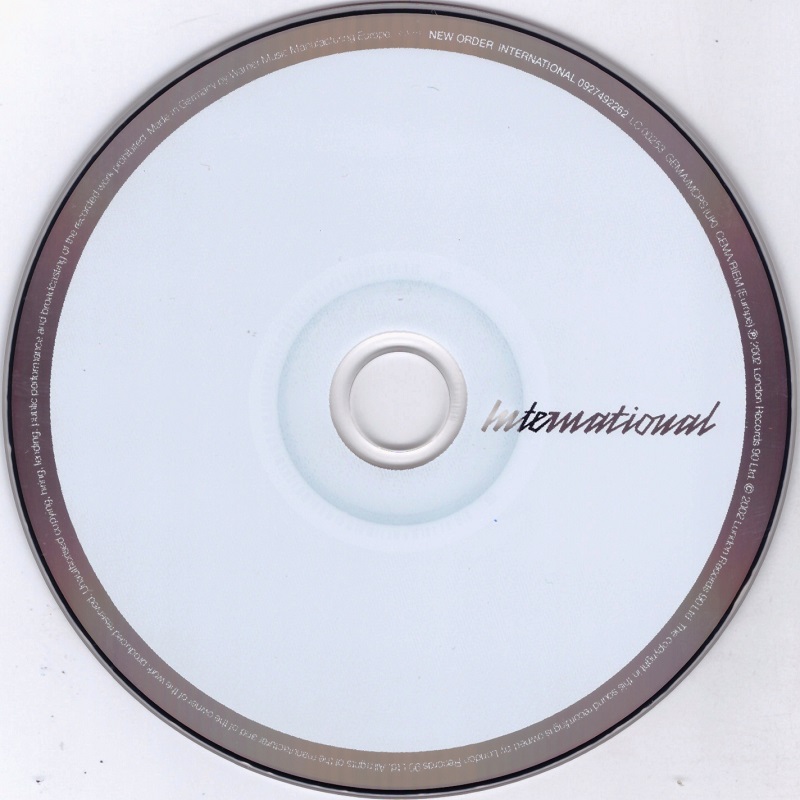
International is a 2002 greatest hits collection from New Order. It was released only in a few countries—United Kingdom notably excluded, although imports were available. Available editions include those from France with a limited edition bonus CD and from the US with a limited edition bonus DVD.

As it came out in the same year as the 4/5 disc Retro compilation, many New Order fans did not purchase International, particularly those fans in the countries in which it was never sold.

One new track, the single "Here to Stay" from the 24 Hour Party People soundtrack, was, however, put on International, which was not on Retro, providing a possible incentive to those fans waiting for Retro.

Track listing
No. Title Length
  1. "Ceremony" (12" version) 4:25
  2. "Blue Monday" 7:26
  3. "Confusion" (1987 version) 4:43
  4. "Thieves Like Us" 6:39
  5. "The Perfect Kiss" 4:51
  6. "Shellshock" 6:31
  7. "Bizarre Love Triangle" (Extended dance mix) 6:44
  8. "True Faith" 5:52
  9. "Touched by the Hand of God" (original 12") 7:05
  10. "Round & Round" (7" version) 4:01
  11. "Regret" 4:11
  12. "Crystal" 6:52
  13. "60 Miles an Hour" 4:36
  14. "Here to Stay" (radio edit) 3:59
French limited edition bonus CD
  1. "Temptation" (1987 version) 7:01
  2. "Lonesome Tonight" 5:12
  3. "Fine Time" (Silk Hurley remix) 6:17
  4. "Round & Round" (Kevin Saunderson 12" mix) 6:50
  5. "Let's Go" 3:56
U.S. limited edition bonus DVD
  1. "Blue Monday" (live from 5/11) 7:21
  2. "True Faith" 5:03
  3. "The Perfect Kiss" 5:43


sábado, 28 de septiembre de 2019

Mike Oldfield "Women Of Ireland (Single & Video)"

"Women of Ireland" is an instrumental piece by musician Mike Oldfield, originally released in 1996. It is a version of the folk song, "Mná na hÉireann" (Women of Ireland), credited as traditional but actually written by Seán Ó Riada.

Originally from the 1996 album Voyager, it also appeared on the compilation XXV: The Essential. The single release "Women of Ireland XXV" includes two mixes of the song along with a reel tune, similar to the ending pieces of the first two Tubular Bells albums.

Track listing
CD single (Germany, 1996)
  1. "Women of Ireland" (edit) - 3:37
  2. "Women of Ireland" (12" Lurker mix – 9:10
  3. "Women of Ireland" (Transient mix) – 9:38

CD single (1997)
  1. "Women of Ireland" (Lurker edit) (Traditional) – 3:37
  2. "Women of Ireland" (Album version) (Traditional) – 6:27
  3. "Mike's Reel" (Mike Oldfield) – 3:51
  4. The Lurker edit remix is by Henry Jackman and George Shilling.

Remix CD single (1997)
  1. "Women of Ireland" (Lurker edit) (Traditional) – 3:37
  2. "Women of Ireland" (System 7 12" mix) (Traditional) – 9:00
  3. "Women of Ireland" (12" Lurker mix (Traditional)– 9:08
  4. "Women of Ireland" (Transient mix) (Traditional) – 9:37


Michael Jackson "Off The Wall"

Off the Wall is the fifth solo studio album by American singer Michael Jackson, released on August 10, 1979 in the United States by Epic Records and internationally by CBS Records. It was Jackson's first album released through Epic Records, the label he recorded under until his death in 2009, and the first produced by Quincy Jones, whom he met while working on the 1978 film The Wiz. Several critics observed that Off the Wall was crafted from funk, disco, soft rock, Broadway and pop ballads. Its lyrical themes include escapism, liberation, loneliness, hedonism and romance.

Off the Wall peaked at number three on the Billboard 200 and was an enormous commercial success, with Billboard additionally ranking it as the third best-selling album of 1980. Five singles were released from the album, three with music videos. Jackson wrote three songs himself, including the number-one single "Don't Stop 'Til You Get Enough". The second single from the album, "Rock with You" also peaked atop the Billboard Hot 100. With Off the Wall, Jackson became the first solo artist to have four singles from the same album peak inside the top 10 of the Billboard Hot 100. The record was a departure from Jackson's previous work for Motown Records, and was hailed as a major breakthrough for Jackson, while receiving critical recognition, along with praises, from major music publications.

Off the Wall was nominated for two Grammy Awards, with Jackson winning Best Male R&B Vocal Performance for "Don't Stop 'Til You Get Enough" which was his first Grammy Award. As of 2018, Off the Wall is certified eight times platinum in the United States and has reportedly sold more than 20 million copies worldwide, making it one of the best-selling albums of all time. Often considered one of the best disco albums of all time, the album was placed at number 68 on Rolling Stone list of "The 500 Greatest Albums of All Time" in 2003. The National Association of Recording Merchandisers listed it at number 80 on its list of the "Definitive 200 Albums of All Time". In 2008, Off the Wall was inducted into the Grammy Hall of Fame.

Between 1972 and 1975, Michael Jackson released a total of four solo studio albums with Motown; Got to Be There, Ben, Music & Me, and Forever, Michael. These were released as part of The Jackson 5 franchise, and produced successful singles such as "Got to Be There", "Ben" and a remake of Bobby Day's "Rockin' Robin". The Jackson 5's sales, however, began declining in 1973, and the band members chafed under Motown's strict refusal to allow them creative control or input. Although the group scored several top 40 hits, including the top five disco single "Dancing Machine" and the top 20 hit "I Am Love", The Jackson 5 (minus Jermaine Jackson) left Motown in 1975. The Jackson 5 signed a new contract with CBS Records in June 1975, first joining the Philadelphia International Records division and then Epic Records. As a result of legal proceedings, the group was renamed The Jacksons. After the name change, the band continued to tour internationally, releasing five more studio albums between 1976 and 1984; their self-titled eleventh album, Goin' Places, Destiny, Triumph, and Victory, as well as a live concert album in 1981. During that period, Michael was not only the lead singer, but also the chief songwriter for the group, writing or co-writing such hits as "Shake Your Body (Down to the Ground)", "This Place Hotel" and "Can You Feel It".

In 1978, Jackson starred as Scarecrow in the film musical The Wiz. The musical scores were arranged by Quincy Jones, who formed a partnership with Jackson during the film's production and agreed to produce the singer's solo album Off the Wall. Jackson was dedicated to the role, and watched videotapes of gazelles, cheetahs and panthers in order to learn graceful movements for his part. Jones recalled working with Jackson as one of his favorite experiences from The Wiz, and spoke of Jackson's dedication to his role, comparing his acting style to Sammy Davis, Jr. Critics panned The Wiz upon its October 1978 release, but Jackson's performance as the Scarecrow was one of the only positively reviewed elements of the film, with critics noting that Jackson possessed "genuine acting talent" and "provided the only genuinely memorable moments." Of the results of the film, Jackson stated: "I don't think it could have been any better, I really don't". In 1980, Jackson stated that his time working on The Wiz was "my greatest experience so far...I'll never forget that".

When Jackson began the Off the Wall project he was not sure what he wanted as the final result; however, he did not want another record that sounded like The Jacksons, but rather he wanted more creative freedom, something he had not been allowed on prior albums. Jackson's father Joseph also approved of the project and allowed him to record it on the condition that it didn't interfere with group business. Despite his brothers' desire to work with him, Jackson wanted to make the album independently of his family. Nevertheless, his brother Randy still contributed percussion to "Don't Stop 'Til You Get Enough".

Jones produced "Off the Wall", with co-production credit given to Jackson on the songs he wrote for the album. Songwriters included Jackson, Heatwave's Rod Temperton, Stevie Wonder and Paul McCartney. All sessions took place at Los Angeles County-based recording studios. Rhythm tracks and vocals were recorded at Allen Zentz Recording, the horn section's contributions took place at Westlake Audio, and string instrumentation was recorded at Cherokee Studios in West Hollywood. Following the initial sessions, audio mixing was handled by Grammy-winning engineer Bruce Swedien at Westlake Audio, after which the original tapes went to the A&M Recording Studio, also located in L.A., for mastering. Swedien would later mix the recording sessions for Jackson's next album and his most well-known work, 1982's Thriller. Jones recalled that, at first, he found Jackson to be very introverted, shy and non-assertive.

"She's Out of My Life" had been written for Jones by Tom Bahler three years earlier. Jackson heard and enjoyed it, and Jones allowed him to use it on the record. Jones called in Heatwave's keyboardist Rod Temperton to write three songs. The intention was for Jackson and Jones to select one of his songs, but Jackson, liking them all, included all of them in the final cut. Jackson stayed up all night to learn the lyrics to these songs instead of singing from a sheet. He finished the vocals to these three Temperton songs in two recording sessions. Temperton took a different approach to his song writing after spending some time researching the background to Jackson's music style. Temperton mixed his traditional harmony segments with the idea of adding shorter note melodies to suit Jackson's aggressive style. Jackson wrote "Don't Stop 'Til You Get Enough" after humming a melody in his kitchen. After listening to hundreds of songs, Jackson and Jones decided upon a batch to record. In hindsight, Jones believed they took a lot of risks in the production of Off the Wall and the final choice of album tracks. Attention was also paid to the album cover, which shows Jackson smiling, wearing a tuxedo and trademark socks. His manager stated, "The tuxedo was the overall plan for the Off the Wall project and package. The tuxedo was our idea, the socks were Michael'".

On October 16, 2001, a special edition reissue of Off the Wall was released by Sony Records. It was re-released again on February 26, 2016. The material found strong praise from critics more than 20 years after the original release. AllMusic gave the record a five star review, praising the record's disco-tinged funk and mainstream pop blend, along with Jackson's songwriting and Jones' crafty production. The publication believed, "[Off the Wall] is an enormously fresh record, one that remains vibrant and giddily exciting years after its release".

In recent years Blender gave the record a full five star review stating that it was, "A blockbuster party LP that looked beyond funk to the future of dance music, and beyond soul ballads to the future of heart-tuggers—in fact, beyond R&B to color-blind pop. Hence, the forgivable Wings cover".

In 2003, the album was ranked number 68 on Rolling Stone magazine's list of the 500 greatest albums of all time, maintaining the rating in a 2012 revised list. The National Association of Recording Merchandisers listed it at number 80 of the Definitive 200 Albums of All Time. In 2004, Nelson George wrote of Jackson and his music, "the argument for his greatness in the recording studio begins with his arrangements of "Don't Stop 'Til You Get Enough". The layers of percussion and the stacks of backing vocals, both artfully choreographed to create drama and ecstasy on the dance floor, still rock parties in the 21st century". In 2008, Off the Wall was inducted into the Grammy Hall of Fame.

On January 7, 2016, Sony Music and The Estate of Michael Jackson announced that Off the Wall would be reissued and packaged with a new documentary directed by Spike Lee entitled Michael Jackson's Journey from Motown to Off the Wall. The reissue and documentary were both released on February 26, 2016. Recent reviews by AllMusic and Blender have continued to praise Off the Wall for its appeal in the 21st century.

In August 2018, on the occasion of what would have been Jackson's 60th birthday, Entertainment Weekly reevaluated the album, giving it a score of A−, saying that the album was Jackson's first musical statement as an adult, that it was "a featherweight rapture of disco-flecked R&B" containing dance-floor favorites and some lesser songs.

Track list:
  1. «Don't Stop 'Til You Get Enough» Michael Jackson 6:05
  2. «Rock with You» Rod Temperton 3:40
  3. «Workin' Day and Night» Michael Jackson 5:14
  4. «Get on the Floor» Michael Jackson, Louis Johnson 4:39
  5. «Off the Wall» Rod Temperton 4:05
  6. «Girlfriend» Paul McCartney 3:05
  7. «She's Out of My Life» Tom Bahler 3:37
  8. «I Can't Help It» Stevie Wonder, Susaye Greene 4:29
  9. «It's the Falling in Love» Carole Bayer Sager, David Foster 3:48
  10. «Burn This Disco Out» Rod Temperton 3:41
2001 Special Edition
  1. «Quincy Jones Interview #1» 0:37
  2. «Introduction to Don't Stop 'Til You Get Enough Demo» 0:13
  3. «Don't Stop 'Til You Get Enough (Original Demo from 1978)» Michael Jackson 4:48
  4. «Quincy Jones Interview #2» 0:30
  5. «Introduction to Workin' Day and Night Demo» 0:10
  6. «Workin' Day and Night (Original Demo from 1978)» Michael Jackson 4:19
  7. «Quincy Jones Interview #3» 0:48
  8. «Rod Temperton Interview» 4:57
  9. «Quincy Jones Interview #4» 1:32