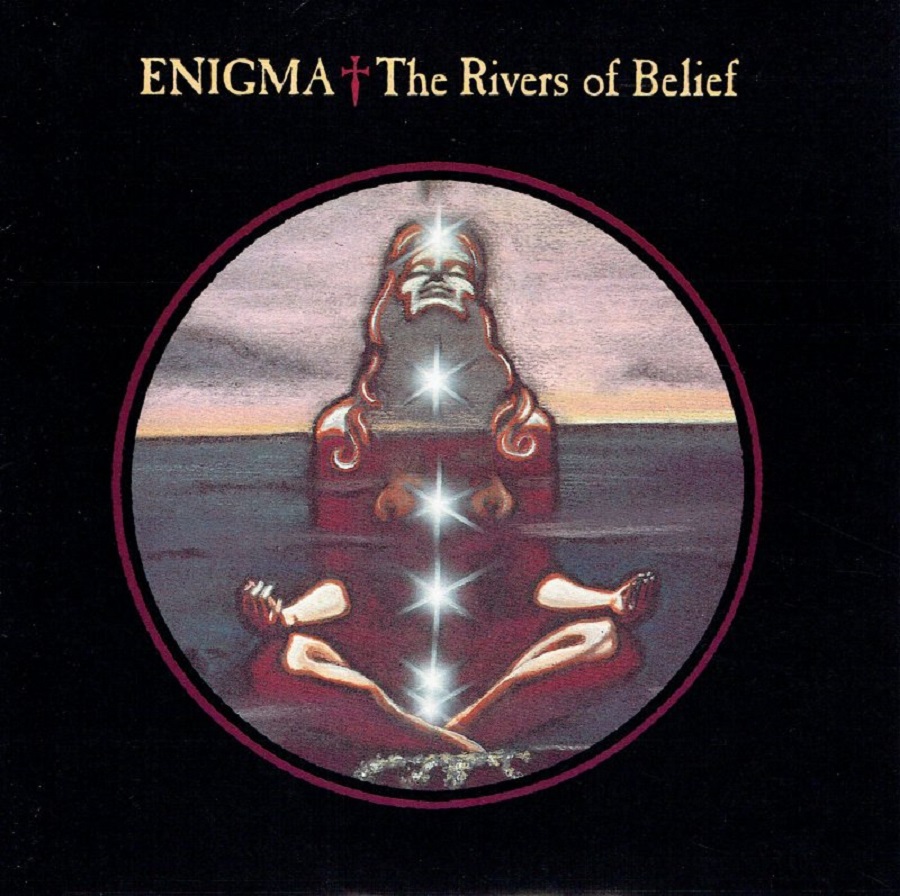
"The Rivers of Belief" is a 1991 song created by the musical project, Enigma. The single was the last to be released from MCMXC a.D..
On the album, the song is part three of the overarching song, "Back to the Rivers of Belief", which includes the songs "Way to Eternity" and "Hallelujah", which then segues into "Rivers of Belief". The single version of the song starts with a sample of the intro to Bach's Toccata & Fugue in D minor and a spoken passage by Sandra, before picking up where the album version begins.
"Principles of Lust" is a 1991 song created by musical project Enigma. It was released as the third single from their debut album, MCMXC a.D. (1990). On the album, "Principles of Lust" is a multi-part song consisting of two versions of "Sadeness" with "Find Love" in between. The single version is a remix of "Find Love" with some additional instrumentation.
Pan-European magazine Music & Media wrote, "The church choir hit-team changes the tempo way down low. Combined with Sandra's vocals and sighs plus some strange bubbling sounds, it should work wonders again."
Track listing:
CD single, UK
"Principles of Lust" (Radio Edit) – 3:25
"Principles of Lust" (Omen Mix) – 5:52
"Principles of Lust" (Jazz Mix) – 3:06
"Sadeness (Radio Edit)" – 4:17
CD single, US
"Principles of Lust" (Radio Edit) – 3:25
"Principles of Lust" (Everlasting Lust Mix) – 5:09
"Principles of Lust" (Album Version) – 4:20
"Principles of Lust" (Jazz Mix) – 3:06
CD single, Japan
"Principles of Lust" (Radio Edit) – 3:25
"Principles of Lust" (Everlasting Lust Mix) – 5:09
"Mea Culpa (Part II)" is a song by German musical project Enigma. It was released in April 1991 as the second of four singles from their debut album, MCMXC a.D. (1990). Like their previous single "Sadeness (Part I)", it is sung in French and Latin, though "Mea Culpa (Part II)" also has a line in English, "The time has come". It was the project's second top ten hit in their native Germany, reaching number seven, as well as reaching the top ten in Belgium, Finland, France, Greece, Italy, Portugal, Spain and Switzerland. However, it failed to match the success of "Sadeness (Part I)" in many other countries, reaching number 20 in Ireland, number 59 in Canada and number 55 in both Australia and the United Kingdom. In the United States, the single failed to chart on the Billboard Hot, but reached number seven on the dance chart. The accompanying music video for the song received heavy rotation on MTV Europe. Two music videos were made, the first for the orthodox version and the second for the catholic version.
Pan-European magazine Music & Media wrote, "Follow-up to the mega hit Sadeness Part I: this time there's also the choice of a Catholic mix. How long do we have to wait until Pope John-Paul II takes action?"
"Sadeness (Part I)" is a song by German musical project Enigma, released in October 1990 by Virgin Records as the lead single from their first album, MCMXC a.D. (1990). It was written by Michael Cretu, Fabrice Cuitad and Frank Peterson, and produced by the latter. The song features French lyrics whispered by Cretu's then-wife, Sandra and became an international hit, reaching number one in 14 countries. In the United States, it peaked at number five on the Billboard Hot 100 and number one on both the Dance Club Play and 12-inch Singles Sales charts. Its music video was directed by Michel Guimbard, featuring a scribe dreaming of wandering into The Gates of Hell. A sequel to the song, "Sadeness (Part II)" featuring Anggun, was released on Enigma's eighth studio album, The Fall of a Rebel Angel (2016).
"Sadeness" was written by Michael Cretu (under the pseudonym Curly M.C.), Frank Peterson (under the pseudonym F. Gregorian), and Fabrice Cuitad (under the pseudonym David Fairstein). The song was named "Sadeness (Part I)" on its single release in Germany, and "Sadness Part I" on its single release in the United Kingdom and Japan. It is a sensual track based around "questioning" the sexual desires of Marquis de Sade; hence the German release name of "Sadeness", as opposed to the English word of "Sadness" used in the UK release. The track reached number-one faster than any new release in German history - before its video clip had even been finished. The record company Virgin had done virtually no promotion on the song. Sales took off purely on the strength of radio and club play.
In the 2017 book Stars of 90's Dance Pop: 29 Hitmakers Discuss Their Careers by James Arena, producer Frank Peterson recalled: "Well, we finished the song, and we were in total awe of ourselves. Michael's manager, who also managed Sandra, came out to Ibiza with us for a weekend, and we played him the track. He was sitting there listening and said, "That's very heavy going. You'll never get that on radio." We started thinking, "Oh shit." An hour later, our contact at Virgin tells us his secretary and other people at the office are fucking amazed by the song. He said he didn't get it, but everyone else seemed to love it. So pretty quickly the song came out."
The track makes use of the following:
Gregorian vocals mostly sampled from the 1977 album Paschale Mysterium by the German choir Capella Antiqua München with conductor Konrad Ruhland. Particularly prominent is music from "Procedamus in pace!", an antiphon which is the second track on the album. The vocals were at first used without permission; a lawsuit followed in 1994 and was settled by compensation.
Part of the drum beat is sampled from James Brown's song "Funky President (People It's Bad)".
The track's main drum beat is sampled from Soul II Soul's 1989 song "Keep on Movin'"
French lyrics whispered by Cretu's then-wife, Sandra, who at the time of Enigma's formation had already hit singles as a solo artist.
Ned Raggett from AllMusic commented, "Snippets of monks invoking the Almighty effortlessly glide in and out of a polite but still strong breakbeat, shimmering, atmospheric synth and flute lines and a Frenchwoman whispering in a way that sounds distinctly more carnal than spiritual (as her gasps for breath elsewhere make clear)." Keith Clark from Bay Area Reporter called the song "suggestive". Larry Flick from Billboard described it as "brilliant and quirky", remarking that "it is currently the fastest-selling single in German recording history." He added that it "has already raised the ire of religious groups for its use of traditional Gregorian chants within the context of orgasmic groaning and a tribal hip-hop groove." Leah Greenblatt from Entertainment Weekly described it as a "incense trance". Irish Evening Herald called it "one of the most seductive dance records of the past couple of years". Swedish Expressen noted that church song are used "as a very reliable vocal generator".
Dave Sholin from the Gavin Report wrote, "Listeners may not have a clue what it's about, but the mood created by this totally unique production will keep 'em glued and wanting more. Not only have the Germans demolished the Berlin Wall, they had the good sense to make this a number one "sod - as in (Marquis De Sade) ness." A reviewer from Music Week described it as "chanting monks and a sensual muttering rolling over a hypnotically rolling slow beat". Ian Cranna from Smash Hits noted the "atmospheric lines" of the song in his review, adding that it's "combining medieval monks' chants and wispy, wistful synthesiser driftings over hippety-hoppety beats." Bob Mack from Spin called it "the Dark Ages disco cut". He added that "the track starts with a standard call and response—but it's one of monks doing Gregorian chants. After the beats kick in, synth washes buoy the flute flourishes, while French spoken words and heavy female panting get the point across." Kimberly Chrisma from The Stanford Daily felt the result of combining Gregorian chant with "pulsating synthesizers" was "an ambient fantasia that made the heart throb and the mind tingle."
The single reached number-one on the UK Singles Chart on 13 January 1991, as well as in Austria, Belgium, France, Germany, Greece, Ireland, Italy, the Netherlands, Norway, Portugal, Spain, Sweden and Switzerland. It reached the top spot on the Eurochart Hot 100, where it remained at the top for nine weeks. In the United States, the single peaked at number five on the Billboard Hot 100 singles chart in April 1991. The record sold over 500,000 copies in the US and was certified Gold there. The single has sold more than 5 million copies worldwide. It earned a gold record in Australia, Austria, France, the Netherlands and the United States, and a silver record in the United Kingdom. It also earned a platinum record in Germany and Sweden.
The accompanying music video for "Sadeness (Part I)" was directed by Michel Guimbard, and received heavy rotation on MTV Europe. It shows a scribe who dreams of wandering among cathedral ruins. He comes up to Auguste Rodin's The Gates of Hell; and as the scribe looks on, he sees a woman (played by French model Kati Tastet) beyond it, who whispers the main lyrics from the song to him. The scribe then opens the gates and, realising what he has done, attempts to flee, but is dragged through the gates. The video ends with the scribe waking up.
In July 2013, Complex included "Sadeness (Part I)" in their list of "15 Songs That Gave Dance Music a Good Name", commenting, "We doubt that something like this, with lyrics in Latin and French that dealt with religion and the sexual desires of Marquis de Sade, would fly in today's pop charts, but there's something that was so undeniable about this new age/downtempo track that it was featured everywhere, from Single White Female to Tropic Thunder." In February 2022, Classic Pop ranked it number four in their list of the top 40 dance tracks from the 90's, praising it as "unique".
Queen of Hearts is a country-pop song written by Hank DeVito, the pedal steel guitarist in Emmylou Harris's backing group The Hot Band. It was first recorded by Dave Edmunds on his 1979 album Repeat When Necessary. Edmunds' version was released as a single and reached number 11 in the UK and number 12 in Ireland that year, but failed to chart substantially elsewhere in the world. The most successful version of the song was recorded by Juice Newton in 1981 – her version reached number two in the United States and South Africa. Newton's version also reached the top 10 in Canada, Australia, Denmark, Switzerland and New Zealand.
Following an appearance on the 1980 Rodney Crowell album But What Will the Neighbors Think, on which composer DeVito played guitar, "Queen of Hearts" had its highest-profile rendition in a version by country-rock singer Juice Newton from the 1981 album Juice. Newton would later recall: "I did ['Queen of Hearts'] live for about a year...Then I brought it to [producer] Richard Landis when we started the Juice album. He wasn't convinced at that point that it was a breakout song but I told him I think this is a real cool song … so we cut it". Newton's own favorite cut on the Juice album, "Queen of Hearts" was issued as the album's second single and would reach number two on the Billboard Hot 100 for two weeks in September 1981. While still at number two, "Queen of Hearts" was certified Gold for domestic sales of one million units.
"Queen of Hearts" also gave Newton her second huge international hit, with top 10 chart positions in Australia, Canada, New Zealand, South Africa, and Switzerland, and more moderate success in Austria, Germany, and the Netherlands. Her recording of the song earned Newton a 1982 Grammy nomination for Best Female Vocalist, Country and Western category, "Queen of Hearts" having been a number 14 country hit. In June 2014, Newton's version of the song was ranked number 92 by Rolling Stone on its list of the 100 greatest country songs of all time.
Newton re-recorded "Queen of Hearts" for her 1998 album The Trouble With Angels.
"Angel of the Morning" is a popular song written by Chip Taylor, originally recorded by Evie Sands but which first charted with a version by Merrilee Rush. The song has been covered by many artists including Chrissie Hynde, Dusty Springfield, P. P. Arnold, Connie Eaton, Mary Mason, Guys 'n' Dolls, Melba Montgomery, Olivia Newton-John and Juice Newton, who reached the Billboard Hot 100 top ten with her version in 1981.
The song was composed in 1967 by Chip Taylor, who said of it: "I wrote 'Angel of the Morning' after hearing the Rolling Stones song 'Ruby Tuesday' on the car radio when I was driving into New York City. I wanted to capture that kind of passion."
"Angel of the Morning" was originally offered to Connie Francis, but she turned it down because she thought that the lyrical message was too risqué for her image.
Taylor produced the first recording of the song with Evie Sands, but the financial straits of Cameo-Parkway Records, which had Sands on their roster, led to a highly limited single release and no promotion.
The second recording was by UK vocalist Billie Davis, made in 1967 by Danny Michaels for Lee Hazlewood's LHI label. Davis' version was later included on her 1970 debut album Billie Davis. P. P. Arnold provided backup vocals for that version and later released a version herself on her 1968 album Kafunta.
The highest-charting and best-selling version in the United States was recorded and released in 1981 by country-rock singer Juice Newton for her album Juice. Newton re-interpreted the song at the suggestion of Steve Meyer, who promoted Capitol Records singles and albums to radio stations and felt that a version of the song by Newton would be a strong candidate for airplay. Newton stated that she would never have thought of recording "Angel of the Morning", even though she immediately recognized the song when Meyer played it for her: "I [had not been] really aware of that song because...when [it] was popular I was listening to folk music and R&B and not pop, and that was a very pop song."
Newton's version reached No. 4 on the Billboard Hot 100, No. 22 on the Billboard country music chart, and spent three weeks at No. 1 on the Billboard adult contemporary chart in April of that year. The recording also earned Newton a Grammy nomination, in the same category as Rush's 1968 hit, at the 24th Annual Grammy Awards. More than one million copies of Newton's single were sold in the United States, and it reached the Top 5 in a number of other countries, including Canada (number 1), Australia (number 2), South Africa (number 3), Switzerland (number 4) and New Zealand (number 5). Notably, Newton's video for "Angel of the Morning" was the first country music video aired on MTV, debuting the day the network launched, in 1981. In the UK, the recording reached No. 43 on the UK Singles Chart, marking the song's third appearance on that chart without becoming a major hit. Newton recorded the song again in 1998 for her album The Trouble with Angels.
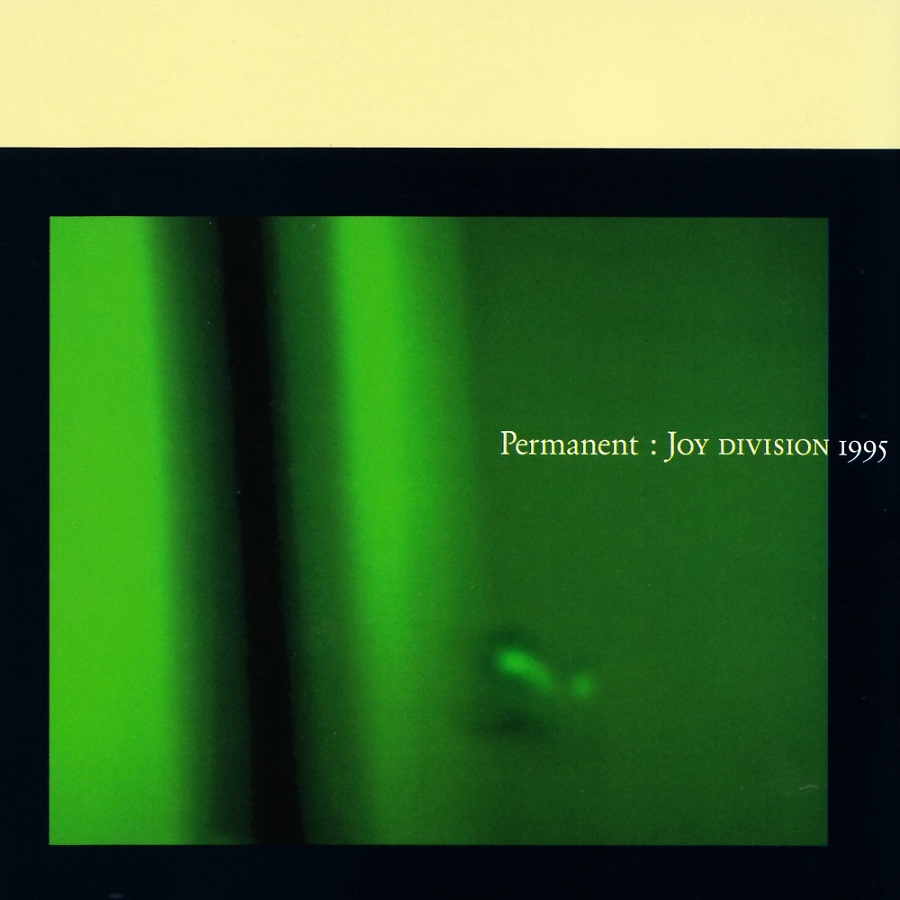
Permanent is a compilation album by English post-punk band Joy Division. It was released in the United Kingdom on 8 May 1995 by London Records and in the United States on 15 August 1995 by Qwest Records and Warner Bros. Records. The album charted for three weeks and peaked at number 16 on the UK Albums Chart.
Permanent contains tracks from the band's two studio albums, Unknown Pleasures and Closer, as well as other tracks previously released on the compilations Substance and Still.
The album contained one new track and one track that was previously unavailable on LP. The new track was a new mix of "Love Will Tear Us Apart" titled "Permanent mix". This version of the song features guitar throughout, balancing the synths and bass. The track that was previously unavailable on LP was the "Pennine version" of "Love Will Tear Us Apart", which was originally released as one of the B-sides on the "Love Will Tear Us Apart" single and was used in place of the regular version. The "Pennine version" label had not yet come into use at the time of the album's release (it would not do so until the release of the expanded edition of Substance in 2015), and the track is not listed as being an alternate version at all. The liner notes (first on a Joy Division album) were provided by Jon Savage.
Entertainment Weekly critic Josef Woodard deemed Permanent a "still-vital compilation" that showcases Joy Division's "cool, beyond-punk voltage beneath Curtis' murmurings." Robert Christgau from The Village Voice said although others revered Ian Curtis' despair, he himself preferred how the band was showcased on the compilation, finding it complementary to 1995's The Best of New Order. Stephen Thomas Erlewine was less enthusiastic in his review for AllMusic, believing it was less useful than the 1988 compilation Substance and the studio albums it compiles tracks from, even though there is "a wealth of brilliant music".
Track listing
All tracks written by Joy Division.
"Love Will Tear Us Apart (Pennine version)" ** – 3:11
"Transmission" – 3:34
"She's Lost Control" – 3:58
"Shadowplay" – 3:53
"Day of the Lords" – 4:45
"Isolation" – 2:53
"Passover" – 4:44
"Heart and Soul" – 5:48
"Twenty Four Hours" – 4:26
"These Days" – 3:27
"Novelty" – 4:00
"Dead Souls" – 4:53
"The Only Mistake" – 4:13
"Something Must Break" – 2:52
"Atmosphere" – 4:10
"Love Will Tear Us Apart (Permanent Mix)" – 3:37
** Not listed as being alternate version at all
Tracks 1 and 10 first released on the "Love Will Tear Us Apart" single in 1980.
Tracks 2 and 11 first released on the "Transmission" single in 1979.
Tracks 3 to 5 first released on the Unknown Pleasures album in 1979.
Tracks 6 to 9 first released on the Closer album in 1980.
Track 12 and 15 first released on the "Licht und Blindheit" single in 1980.
Tracks 13 and 14 first released on the Still album in 1981.
Track 16 previously unreleased.
Came in standard jewel case with clear tray, including a 10-page roll fold insert with liner notes, artwork and credits.
Recording information:
Martin Hannett – producer
Joy Division – producer
Don Gehman – additional production and remix: Track 16