Mostrando las entradas con la etiqueta Orchestral Manoeuvres in the Dark (OMD). Mostrar todas las entradas

lunes, 30 de septiembre de 2019

Orchestral Manoeuvres In The Dark (OMD) "The Best of OMD"

The Best of OMD is a compilation album by Orchestral Manoeuvres in the Dark, released in 1988.

The record essentially delineates the group's experimental early years from their pop-oriented later work: side one features recordings from 1979–1984, while side two is drawn from the group's 1984–1988 efforts. It was a worldwide success, becoming a Top 5 hit across Europe and achieving 3x platinum sales in the United Kingdom and gold status in the United States. "Dreaming" was released as a single and made little impact on the UK charts, reaching no. 50, but it was a hit in the US (no. 16), Germany (no. 26) and South Africa (no. 2).

The version of "Electricity" used is the same as the one featured on their debut album (which itself is the band reworking Martin Hannett's original Factory version). The band was originally going to use their very first version of this song, but found the drumming to be inferior and so settled for the remix of the track instead. "Messages" is the more popular 10" single version; "Tesla Girls" is a compilation version not previously released; and "Talking Loud and Clear" is the 7" edited version.

The worldwide CD, MiniDisc and DCC versions of the album are resequenced and feature four extra tracks not present on the LP version: "Telegraph" (a unique mix found only on this release, differing from the album version and both 12" versions), "Genetic Engineering", and 12" versions of "La Femme Accident" and "We Love You". The US CD adds only the latter two 12" versions. The Australian version of the vinyl album replaces "Secret" with "We Love You", since that song had been a popular hit there. There was also a video compilation released with the promo videos of some of the songs featured on the album.

It was the group's final album release of the decade, effectively closing a chapter on their history, and just before founding members Andy McCluskey and Paul Humphreys split in 1989, leaving the group name to McCluskey. According to Andy McCluskey, OMD released the album in order to pay off debts owned to Virgin Records.

Track listing
  1. "Electricity" Humphreys, McCluskey Orchestral Manoeuvres in the Dark 3:30
  2. "Messages" Humphreys, McCluskey Orchestral Manoeuvres in the Dark 4:44
  3. "Enola Gay" McCluskey Organisation 3:31
  4. "Souvenir" Humphreys, Cooper Architecture & Morality 3:34
  5. "Joan of Arc" McCluskey Architecture & Morality 3:47
  6. "Maid of Orleans" McCluskey Architecture & Morality 4:09
  7. "Telegraph" Humphreys, McCluskey Dazzle Ships 3:43
  8. "Tesla Girls" Humphreys, McCluskey Junk Culture 3:33
  9. "Locomotion" Humphreys, McCluskey, Troeller Junk Culture 3:53
  10. "Talking Loud and Clear" Humphreys, McCluskey, Cooper Junk Culture 3:53
  11. "So in Love" Humphreys, McCluskey, Hague Crush 3:28
  12. "Secret" Humphreys, McCluskey Crush 3:56
  13. "If You Leave" Humphreys, McCluskey, Cooper Pretty in Pink 4:28
  14. "(Forever) Live and Die" Humphreys, Weir, Weir The Pacific Age 3:34
  15. "Dreaming" Humphreys, McCluskey Previously unreleased 3:54
  16. "Genetic Engineering" Humphreys, McCluskey Dazzle Ships 3:35
  17. "We Love You" (12" Version) Humphreys, McCluskey, Hague The Pacific Age 6:14
  18. "La Femme Accident" (12" Version) Humphreys, McCluskey Crush 6:16

"Electricity" and "Dreaming" are produced by OMD.
"Messages", "Enola Gay" and "Souvenir" are produced by OMD and Mike Howlett.
"Joan of Arc" and "Maid of Orleans" are produced by OMD and Richard Manwaring.
"Telegraph" and "Genetic Engineering" are produced by OMD and Rhett Davies.
"Tesla Girls", "Locomotion" and "Talking Loud and Clear" are produced by OMD and Brian Tench.
"So in Love", "Secret", "(Forever) Live and Die", "We Love You" and "La Femme Accident" are produced by Stephen Hague.
"If You Leave" is produced by OMD and Tom Lord Alge.


miércoles, 3 de julio de 2019

Various Artists "Just Can't Get Enough: New Wave Hits of the '80s Vol.15"

Just Can't Get Enough: New Wave Hits of the '80s is a series of compilations issued by Rhino Records, on both CD and audio cassette, featuring various artists from the new wave era 1977–1985.

The series contained 15 volumes. The first five were released on 21 June 1994, volumes 6–10 on 18 October 1994, and the last five volumes on 20 June 1995. Additional themed volumes—New Wave Dance Hits, New Wave Women, New Wave Halloween, and New Wave Christmas—came out in subsequent years. Rhino Records discontinued the series, due to rights issues and with no plans to re-release them. Many of the songs in the series are mastered from the 7" single masters. The series includes some songs making their first CD appearance (in some rare cases, their only CD appearance).

The fifteenth volume was released on both CD [R2 71977] and audio cassette on June 20, 1995. Includes liner notes by Jean Rosenbluth.
  1. "Walking on Sunshine" Katrina & the Waves 4:00
  2. "Head over Heels" Tears for Fears 4:19
  3. "It's a Mistake" Men at Work 4:34
  4. "Life in a Northern Town" The Dream Academy 4:18
  5. "Beat's So Lonely" Charlie Sexton 5:18
  6. "Guitar, Talk, Love & Drums" Gary Myrick 4:18
  7. "Since Yesterday" Strawberry Switchblade 2:56
  8. "Obsession" Animotion 4:04
  9. "Endicott" Kid Creole and the Coconuts 4:29
  10. "Perfect Way" Scritti Politti 4:06
  11. "So in Love" Orchestral Manoeuvres in the Dark 3:31
  12. "Election Day" Arcadia 4:34
  13. "19" Paul Hardcastle 3:40
  14. "Why?" Bronski Beat 3:58
  15. "Some People" Belouis Some 4:01
  16. "Like a Virgin" The Lords of the New Church 3:49
Compiled & Produced for release by: David McLees & Andrew Sandoval

Sound Produced by: Bill Inglot
Compilation Assistance: David Kapp, Emily Cagan, Jim Neill, Brady Benton, Ken Lesnik, Joe Phiefer, Ted Myers, Gary Peterson, Gary Stewart, Chris Farman
The licensing King: Mark Pinkus
Discographical Annotations: Patrick Milligan
Project Assistance: Garson Foos, Keith Altomare, Jim Neill, Steve Poltorak, Craig Kamins, Bill Inglot, Jock Elliot, Antone DeSantis, Arny Schorr, Darcy Sullvan, Stephen K. Peeles, Norma Edwards, Nancy Hopkins, Michaeal Mazzarella, Nat Brewster, Janet Grey, David Miller.

Research: Patrick Milligan, Gary Peterson
Remastering: Bill Inglot, Andrew Sandoval & Ken Perry
Front Cover Photo: Blind Gary & Dirty Pierre Silva (Volumes 6–15 only)
Design: Julie Vlasak (Volumes 6–15 only) & Steve Bates
Art Direction (Volumes 6–15 only): Monster X

Rhino New Wave Hits of the '80s Team: Keith Altomare, Steve Bates, Emily Cagan, Chris Clarke, Julie D'Angelo, David Born, Garson Foos, Teresa McGurrin, David McLees, Jim Neill, David Newberg, Mark Pinkus, Faithe Raphael

Special Thanks: Michael Ackerman, James Austin, Hugo Bernham, Jay Boberg, Chris Castle, Cliff Chenfeld, Paul Cope/Record Rover, Jesse & Rachel Donahue, Richard Foos, Maria Garza, Jeff Gold, Paul Grein, Tanya Harman, Bruce Harris, Keith Johnson, Lisa Kellerhouse, Howie Klein, Scott Lasker, Bill Levenson, Tom Lopinski, Donna Malyszko, Toby Mamis, Paul C. Mawhinney/Record Rama, Maria Mandez, Brad Morrison, Mark Mulcahy, Frankie Pine, Ken Reed/Main Street Records, Fred Schneider, Suzanne Steers, Lisa Sutton, Gerrard Talbot, David Tedds, Vincent Vero, Paul Williams


miércoles, 17 de octubre de 2018

Orchestral Manoeuvres in the Dark (OMD) "(Forever) Live and Die (Single & Video)"

"(Forever) Live and Die" is a song by British synthpop band Orchestral Manoeuvres in the Dark (OMD), released as the first single taken from their 1986 album, The Pacific Age. Paul Humphreys sings lead vocals on the track. The single peaked at number 11 on the UK Singles Chart. It was a Top 10 hit in Canada and several European territories, and a Top 20 hit in the United States, Australia, New Zealand, and Ireland.


martes, 16 de octubre de 2018

Orchestral Manoeuvres in the Dark (OMD) "If You Leave (Single & Video)"

"If You Leave" is a 1986 song by the British synthpop group Orchestral Manoeuvres in the Dark (OMD). It was recorded for the soundtrack to the film Pretty in Pink (1986), in which it is played prominently during the final scene. Along with 1980's "Enola Gay", the track has been described as the band's signature song.

"If You Leave" is the group's highest-charting single in the United States, where it reached number 4 on the Billboard Hot 100 chart in May 1986. The song was also a Top 5 entry in Canada and New Zealand, and charted at number 15 in Australia. A distinguishing track of the 1980s, it has had an enduring presence on radio.

The band wrote "If You Leave" after John Hughes decided to change the ending to Pretty in Pink after poor test audience reactions. Hughes had asked the band for a song for the new ending two days before they were due to begin a tour, and "If You Leave" was written and recorded in under 24 hours as a result. The song was deliberately written at a tempo of 120 BPM, to match the speed of "Don't You (Forget About Me)", which the dancers in the scene had initially danced to. Despite this songwriter Andy McClusky later noted that an editing error meant that the dancing appears out of sync regardless. The original ending featured another OMD song, "Goddess of Love", which was released on The Pacific Age later in 1986.


Orchestral Manoeuvres In The Dark " The OMD Singles"

The OMD Singles is a singles compilation album by Orchestral Manoeuvres in the Dark, released in 1998. It reached No. 16 in the UK charts. Originally, the compilation was to include a second disc of new remixes; however, this idea was abandoned due to budget limitations. The few remixes that were produced were released separately as The OMD Remixes. In 2003, The OMD Singles was reissued in France with the remix disc finally included, comprising the 1998 remixes as well as additional remixes. In the same year Virgin also released a two-disc box set comprising The OMD Singles and Navigation: The OMD B-Sides.


Orchestral Manoeuvres In The Dark (OMD) "So In Love (Single & Video)"

"So in Love" is a song by the band Orchestral Manoeuvres in the Dark (OMD), released in 1985 as the first single from the album Crush. The artwork, designed by XL Design, and the promo video were both influenced by the Mexican Day of the Dead festival.

Due to the opening line of its chorus, the song was confused with another OMD track – "Heaven Is", a song first performed in 1983 and eventually released on 1993's Liberator – on file sharing services such as Napster.

Although "So in Love" was the first single from Crush, it was one of the last songs written for the album. It was originally dropped until band member Martin Cooper persuaded Andy McCluskey and Paul Humphreys to make a demo for the song. Andy McCluskey said it was about the painful end of a relationship. It was their first hit in the United States, after five years of trying to "break" the States.

The first approximately 50,000 copies of the 7" singles were released as a limited edition double-pack in a gatefold sleeve. There were four different 12" singles released, and one of these was also released as a picture disc. The first issue had the normal version of the song on the A-side, with an extended version of "Concrete Hands" on the B-side. Later issues included remixes of "So in Love" on the A-sides. Three remixes were made: the "Extended Version", "New Extended Version", and the "Brand New Extended Version", also known as the "Special American Dance Remix".

The official music video for the song was directed by Andy Morahan, and filmed on-location in Spain.


lunes, 12 de marzo de 2018

Orchestral Manoeuvres In The Dark (OMD) "Enola Gay (Single & Video)"

"Enola Gay" is an anti-war song by the British synth-pop group Orchestral Manoeuvres in the Dark (OMD) and the only single from the band's 1980 album, Organisation. The track addresses the atomic bombing of Hiroshima on 6 August 1945, during the final stages of World War II. It was written by vocalist/bass guitarist Andy McCluskey.

Along with 1986's "If You Leave", "Enola Gay" has been described as OMD's signature song. The single was an international success, selling more than 5 million copies, while the track became an enduring hit.

Typical of early OMD compositions, the track does not feature a vocal chorus, and is recognisable by its strong, distinctive lead synthesizer hook and ambiguous lyrical content. Most of the melodic parts were recorded on a Korg Micro-Preset, and the drum machine sound was "about the last thing to go on" the recording. The song is based on the 50s progression, which repeats throughout the entire song.

Keyboardist Paul Humphreys and OMD manager Paul Collister were not fans of "Enola Gay" (the latter originally threatened to resign if it were released as a single). Collister did, however, believe it was a surefire hit – a view that drummer Malcolm Holmes did not share. Initially proud of the song, McCluskey's confidence wavered: he re-recorded his vocal, but was dissatisfied with the final mix of the track.

The song is named after the Enola Gay, the USAAF B-29 Superfortress bomber that carried Little Boy, the first atomic bomb to be used in an act of war, dropped on the Japanese city of Hiroshima on 6 August 1945, killing more than 100,000 of its citizens. The name of the bomber itself was chosen by its pilot, Colonel Paul Tibbets, who named it after his mother, Enola Gay Tibbets (1893–1983), who had been named after the heroine of the novel Enola; or, Her fatal mistake.

The lyrics to the song reflect on the decision to use the bomb and ask the listener to consider whether the bombings were necessary ("It shouldn't ever have to end this way"). The phrase, "Is mother proud of Little Boy today?", is an allusion to both the nickname of the uranium bomb, as well as the fact that pilot Paul Tibbets named the aircraft after his mother. The phrase, "It's 8:15, and that's the time that it's always been", refers to the time of detonation over Hiroshima at 8:15 am JST; as many timepieces were "frozen" by the effects of the blast, it becomes "the time that it's always been". The song was also released during controversy surrounding Prime Minister Margaret Thatcher's decision to allow US nuclear missiles to be stationed in Britain.

McCluskey stated that he "wasn't really politically motivated to write the song", which was informed by a fascination with World War II bombers. He hoped the track "conveyed an ambivalence about whether it was the right or the wrong thing to do".

"Enola Gay" is popular with early home computer enthusiasts, being used in demos such as Swinth (Commodore 64). Hackers have also enjoyed the song; it can be found as the "music bed" for numerous mega-demos and "cracktro" found on releases by warez groups like the Beastie Boys. The song was featured in the 2015 film Ex Machina, a sci-fi thriller about the implications of artificial intelligence.

16-bit computers brought with them the popular music tracker format where no fewer than a dozen versions exist.

The music video was shot at the ITN studios in three hours one afternoon. It begins by showing sped-up footage of clouds passing through the sky. After the opening riff, which is shown as the keyboardist's hands playing whilst being animated using digital rotoscoping, it shows a transparent video image of McCluskey vocalising and playing bass guitar.

Track listing
1980 original release

Side one
  1. "Enola Gay" 3:33
Side two
  1. "Annex" 4:33
The 12" single contained the same tracks as on the 7".


jueves, 27 de julio de 2017

Orchestral Manoeuvres in the Dark (OMD) "English Electric"

English Electric is the twelfth studio album by English synthpop group Orchestral Manoeuvres in the Dark (OMD), and their second since the 2006 reformation of the band. Preceded by lead single "Metroland" on 25 March 2013, it was released on 5 April 2013 by 100% Records and peaked at #12 in the United Kingdom, becoming the group's highest-charting record in their home country since 1991's Sugar Tax; the album topped the UK Indie Chart. As with comeback release History of Modern (2010), English Electric was a Top 10 hit in Germany, reaching #10. It also made #8 on the Dance/Electronic Albums Billboard chart in the United States.

On 14 January 2013, the band announced details of the album release date, track listing, and a teaser video featuring the short Dazzle Ships-esque track "Decimal". The album will be released on CD, deluxe CD+DVD, heavyweight vinyl LP, a collector's tin boxset, and also digitally.

The track "Kissing the Machine" was originally featured on the 1993 album Esperanto by Elektric Music, a project by Karl Bartos after he left Kraftwerk. The track, co-written with Andy McCluskey, was completely reworked by Paul Humphreys for English Electric, and features Claudia Brücken as the voice of the machine. The track "Stay With Me" features Humphreys on vocals for the first time since the release of 1988 "Dreaming" B-side "Gravity Never Failed".

The video for "Atomic Ranch" premiered on Pitchfork Media on 4 February 2013. The video is the second of three animations by Henning M. Lederer which will be available on the bonus DVD of English Electric.

The lead single "Metroland" premiered on the BBC Radio 6 Music radio show Radcliffe & Maconie on 11 February 2013. The B-side to "Metroland" is a non-album track titled "The Great White Silence".

The full album was made available to stream on Pitchfork Media on 2 April 2013.

For Record Store Day 2013, on 20 April, a 500-copy limited edition 10-inch picture disc EP of "The Future Will Be Silent" was made available, which includes an exclusive non-album track titled "Time Burns".


"Dresden" was released as the second single from the album on 17 May 2013. The promo video was premiered on the New York Times website a week earlier on 10 May 2013. The single bundle features a remix by John Foxx And The Maths who also supported OMD on the UK part of their English Electric Tour.


Orchestral Manoeuvres in the Dark (OMD) "History of Modern"

History of Modern is the eleventh studio album by British synthpop band Orchestral Manoeuvres in the Dark (OMD). It is their first since 1996, and also the first to feature the classic 4-piece OMD line-up since 1986's The Pacific Age. The record was released in the UK on 20 September 2010, peaking at #28. It was a considerable hit in Germany, reaching #5 – the group's highest chart placing for an LP in that country. The album was released in the US on Bright Antenna on 28 September 2010.

A free download demo track taken from the album, called "Sister Marie Says", was released on 25 November 2009 and featured backing vocals from British classical crossover soprano Keedie Babb. The first single from the album, "If You Want It", was released on 6 September 2010.

On 2 March 2011 an EP, History of Modern (Part I) was released containing remixes and B-Sides from History of Modern.

The artwork for History of Modern was conceived by Peter Saville and designed by Four23. The title was thought of by lead singer Andy McCluskey after he took his daughter to an art exhibition called 'The History of Modernism'.


Orchestral Manoeuvres in the Dark (OMD) "Universal"

Universal is the tenth album by Orchestral Manoeuvres in the Dark (OMD), released in 1996. It spawned the group's first Top 20 hit in the UK for over five years with the track "Walking on the Milky Way". However, follow-up single "Universal" and the album itself performed poorly and this lack of success prompted singer Andy McCluskey to dissolve the band. It would remain their final album for over a decade until the group's reunion.

OMD co-founder Paul Humphreys, who had departed the group in 1989, served as principal songwriter on "Very Close to Far Away" and "If You're Still in Love with Me". Erstwhile McCluskey collaborator Karl Bartos (formerly of Kraftwerk) co-wrote "The Moon & the Sun".


miércoles, 26 de julio de 2017

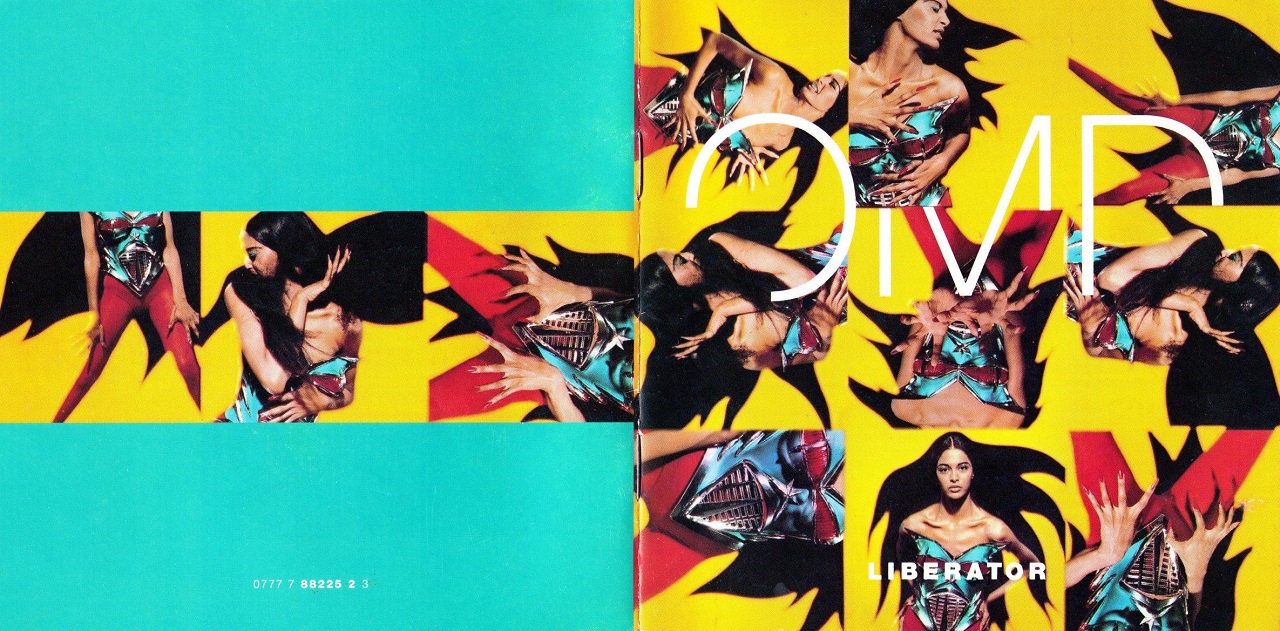
Orchestral Manoeuvres in the Dark (OMD) "Liberator"

Liberator is the ninth album by Orchestral Manoeuvres in the Dark, released in 1993. It peaked at No. 14 on the UK Albums Chart.

None of the album's three singles cracked the Top 20 of the UK Singles Chart, although lead single "Stand Above Me", and follow-up "Dream of Me" did make No. 21 and No. 24 respectively. OMD co-founder Paul Humphreys, who had left the group in 1989, co-wrote third single "Everyday" (a No. 59 UK chart entry).

Frontman Andy McCluskey had originally been influenced by World War II aircraft, the B-24 Liberator in particular. The cover art originally featured a variation of the "bomber girl" nose cone art that many of them used.

"Sunday Morning" is a cover version of the song originally recorded by The Velvet Underground. "Dream of Me (Based On "Loves Theme")" takes a sample from the instrumental hit, "Love's Theme", originally released in 1973 by The Love Unlimited Orchestra.

"Heaven Is" was first performed by OMD during their showcase tour in late 1983, prior to the release of the Junk Culture album the next year (along with other new songs such as "Tesla Girls", "Never Turn Away", and the title track). "Heaven Is" however did not make the album and was shelved (it also nearly made 1986's The Pacific Age) until the publication of this re-recorded version which contains some lyrical variations such as the name of the pornographic actress Christy Canyon as opposed to newsreader Selina Scott in the 1983 version. A demo version of the original was finally released in 2015, as a bonus track on the deluxe edition of Junk Culture.


A song called "The Liberator" had been planned to appear on the album, but was dropped.