Mostrando las entradas con la etiqueta Amy Grant. Mostrar todas las entradas

lunes, 27 de octubre de 2025

Peter Cetera "Solitude - Solitaire (2010 Reissue, Remastered, Forever Young Series, Japan, Warner-Pioneer/Fullmoon, WPCR-75548)"

Solitude/Solitaire is the second solo album by former Chicago bassist and vocalist Peter Cetera, and his first album after leaving the band in 1985. It was released in June 1986. The album includes the hits "Glory of Love" and "The Next Time I Fall" (with Amy Grant); both reached the No. 1 position on the Billboard Hot 100 chart. Solitude/Solitaire was produced by Michael Omartian, who later co-produced Cetera's 2001 album, Another Perfect World.

Cetera co-wrote eight of the nine songs on the album, "The Next Time I Fall" being the exception. Because Cetera had been a prominent songwriter for Chicago, many of the songs on Solitude/Solitaire were rumored to originally have been slated for Chicago 18, especially "Big Mistake" and "Daddy's Girl".

While "Big Mistake" was due to be the first single from the album, "Glory of Love", co-written by Cetera, David Foster, and Diane Nini, was released instead. That song, from the film The Karate Kid Part II, topped the Billboard Hot 100 and Adult Contemporary charts, and helped Solitude/Solitaire to eventually go platinum. The follow-up single, "The Next Time I Fall", was also a major success and topped the charts. Later singles released from the album included "Big Mistake" and "Only Love Knows Why", which was co-written by the producer Michael Omartian and George Bitzer and reached No. 24 on the Billboard Adult Contemporary chart. The song, "Daddy's Girl," is part of the soundtrack for the 1987 American comedy film, Three Men and a Baby.

The album was Cetera's greatest solo success, peaking at No. 23 on the Billboard 200 chart. It was certified platinum by the RIAA, selling over one million copies in the U.S.

Solitude/Solitaire marked a high point in Cetera's career, where he achieved success for the first time on his own. It sold more copies than Chicago 18, Chicago's first album without Cetera, which peaked at No. 35.

Track listing
  1. "Big Mistake" (Peter Cetera, Amos Galpin) – 5:39
  2. "They Don't Make 'Em Like They Used To" (Cetera, Erich Bulling) – 4:04
  3. "Glory of Love" (Cetera, David Foster, Diane Nini) – 4:19
  4. "Queen of the Masquerade Ball" (Cetera, Michael Omartian) – 3:50
  5. "Daddy's Girl" (Cetera, Mark Goldenberg) – 3:46
  6. "The Next Time I Fall" (with Amy Grant) (Bobby Caldwell, Paul Gordon) – 3:43
  7. "Wake Up to Love" (Cetera, David Wolinski, Omartian) – 4:29
  8. "Solitude/Solitaire" (Cetera, Omartian) – 4:58
  9. "Only Love Knows Why" (Cetera, George Bitzer, Omartian) – 4:29
Recording information:
Michael Omartian – producer
Terry Christian – engineer, mixing
John Guess – engineer, mixing
Britt Bacon – second engineer
Khaliq Glover – second engineer
Laura Livingston – second engineer
Ray Pyle – second engineer
Lion Share Recording Studios, Los Angeles, California – recording and mixing location
Lighthouse Studios, Studio City, California – recording location
Skyline Studios, New York, New York – recording location
Steve Hall – mastering at Future Disc, Hollywood, California
Herb Ritts – photography
Jeri McManus – art direction and design




sábado, 19 de febrero de 2022

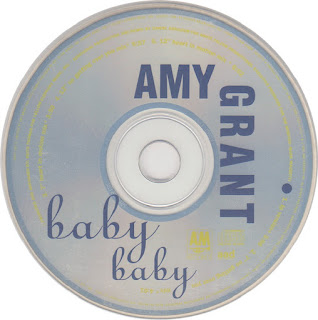
Amy Grant "Baby, Baby (Single & Video)"

"Baby Baby" is a 1991 pop song by American recording artist Amy Grant and it was issued as the first single from her eighth studio album Heart in Motion. The song was written by Keith Thomas and Grant. It was released on January 18, 1991, through A&M Records and topped the Billboard Hot 100 chart for two consecutive weeks in April 1991, becoming the first in a string of hits from Heart in Motion. At the 34th Annual Grammy Awards in 1992, the song received three Grammy Award nominations, including Song of the Year.

The music was written by Keith Thomas. Grant always knew the song would be a smash hit, and was begging Thomas to write the song. He agreed with the only condition that the song's title must be "Baby Baby". Grant had a hard time writing the lyrics, because her early attempts to write a romantic-sounding lyric to a song with such title came off sounding like "some overgrown football jock with no vocabulary trying desperately to be romantic". But one day, after having seen her six-week-old daughter Millie, she said to herself: "Oh, baby baby". As a result, the lyrics were written in about ten minutes in her kitchen. In the Heart in Motion booklet are the words: This song is dedicated to Millie, whose six-week-old face was my inspiration. Millie would also appear on stage during Grant's performance at the 34th Grammy Awards.

"Baby Baby" was Amy Grant's biggest hit since her 1986 duet with Peter Cetera, "The Next Time I Fall". In the United States, "Baby Baby" became Grant's second number-one hit on the pop charts and her first as a solo artist, topping the Billboard Hot 100 (replacing Wilson Phillips' "You're in Love" from the top spot) and Adult Contemporary charts for two and three weeks, respectively. It also made Grant the first Christian pop singer to have a number-one single in the United States. The single reached the Top Ten in ten countries, in addition to reaching No. 11 in Switzerland. In the United Kingdom, "Baby Baby" was the singer's first (and only) Top Five hit in that country, reaching No. 2 in the UK Singles Chart. "Baby Baby" went on to become Grant's biggest hit single and one of the most successful singles of 1991.

A music video was directed by D.J. Webster. and edited by Scott C. Wilson. According to Webster, the video's main idea was to create a picture of the relationship that everybody wants. Grant added, "I think when you get film where there is a good sense of humor and mutual respect and people are just having a good time, everybody wants a piece of that". Its beginning features Grant receiving attention from other men, and her staying loyal to her lover, portrayed by model Jme Stein (who also appeared in her other video from that album "Good for Me"). At some point Stein is seen singing along with Grant and at the end lip-syncing to the words "Baby I'm so glad". The rest of the video is all about the couple having fun together.

The video first aired in March 1991, although MTV didn't air it until it had become too popular not to. A music critic J.D. Considine praised the video, writing that "the Baby Baby clip defines the way most of us imagine her. It was hardly typical video fare, with no special effects or distant locales; all it offered was Grant and a good-looking guy cavorting and acting pretty as she lip-synced to the song. Yet there was something genuinely appealing about the image it conveyed, something that made viewers want to see the thing again". It received a nomination for Best Female Video at the 1991 MTV Video Music Awards, but lost to Janet Jackson's "Love Will Never Do".

It's available on the 1992 music video tape The Heart in Motion Video Collection and 2004 music video DVD Greatest Videos 1986-2004. A live performance is available on the 2006 DVD Time Again… Amy Grant Live.


Amy Grant "Heart In Motion"

Heart in Motion is the ninth studio album by Christian pop singer Amy Grant, released on March 5, 1991. The album features Grant's biggest worldwide hit, "Baby Baby" and was certified 5× platinum in the United States, selling over five million copies.

In contrast to its predecessor, the more acoustic Lead Me On, Heart in Motion consists of songs that were more heavily processed, as was the style of mainstream music at the time. In addition, unlike Lead Me On, Heart in Motion contains few overtly religious songs, with most of the lyrics for the songs on the album dealing with love or other life issues which would not be the exclusive concern of devout Christians. A couple of songs on the album, however, were openly Christian in their content, such as "Ask Me", which describes how a woman's faith helps her to heal from child sexual abuse, and "Hope Set High", both of which were hits on Christian radio. Another song with an overtly Christian theme is "You're Not Alone" which references a greater power despite edgy features like whipcracks and a guitar solo.

Heart in Motion peaked at No. 10 on the Billboard 200 and No. 1 of the Christian albums chart for 32 weeks. It sold five million copies by the end of 1997. The first single from the album, "Baby Baby" offers the lyric that provides the album title and reached No. 1 on the Billboard Hot 100 and the Hot Adult Contemporary Tracks charts. The following four singles also performed well on the pop and AC charts: "Every Heartbeat" (No. 2 Hot 100, No. 2 AC), "That's What Love Is For" (No. 7 Hot 100, No. 1 AC), "Good for Me" (No. 8 Hot 100, No. 4 AC), and "I Will Remember You" (No. 20 Hot 100, No. 2 AC). The album was listed at No. 30 in the 2001 book, The 100 Greatest Albums in Christian Music[5] and was certified 5x platinum by the RIAA for sales of over 5 million copies, making it the best-selling Christian music album ever released.

The album also received a nomination at the Grammy Awards of 1992 for Album of the Year, which was awarded to Unforgettable... with Love by Natalie Cole.

A 30th-anniversary remaster of the album, including a second disc of demos, outtakes, and remixes, was released by Amy Grant Productions, with distribution by Capitol Christian Music Group, on July 9, 2021.

Track listing
  1. "Good for Me" Amy Grant, Wayne Kirkpatrick, Tom Snow, Jay Gruska Keith Thomas 3:59
  2. "Baby Baby" Grant, Thomas Thomas 3:57
  3. "Every Heartbeat" Grant, Kirkpatrick, Charlie Peacock Brown Bannister 3:32
  4. "That's What Love Is For" Grant, Michael Omartian, Mark Mueller Omartian 4:17
  5. "Ask Me" Grant, Tom Hemby Omartian 3:51
  6. "Galileo" Grant, Omartian, Gardner Cole, Mimi Verner Omartian 4:19
  7. "You're Not Alone" Simon Climie, Rob Fisher, Dennis Morgan Bannister 3:49
  8. "Hats" Grant, Chris Eaton Bannister 4:09
  9. "I Will Remember You" Grant, Gary Chapman, Thomas Omartian 5:00
  10. "How Can We See That Far" Grant, Hemby Bannister 4:26
  11. "Hope Set High" Grant Omartian 2:48
Total length: 44:12

Production

Michael Blanton – executive producer
Amy Grant – executive producer
Todd Moore – production assistant (1, 2), assistant engineer (1, 2)
Traci Sterling – production coordinator (3, 7, 8, 10)
Richard Headen – production coordinator (3, 7, 8, 10)
Janet Hinde – production coordinator (4, 5, 6, 9, 11)
Bill Whittington – recording engineer (1, 2)
Todd Culross – assistant engineer (1, 2)
Kelly Pribble – assistant engineer (1, 2)
Jeff Balding – audio engineer (3, 7, 8, 10), mixing (3, 8, 10)
Bob Loftus – assistant audio engineer (3, 7, 8, 10)
Bill Deaton – overdub engineering (3, 7, 8, 10)
Steve Bishir – overdub engineering (3, 7, 8, 10)
Rick Will – overdub engineering (7)
Terry Christian – audio engineer (4, 5, 6, 9, 11), overdub engineering (7), mixing (4, 5, 6, 9, 11)
Clark Germain – overdub engineering (10)
David Ahlert – additional engineering (4, 5, 6, 9, 11)
Laura Livingston – additional engineering (4, 5, 6, 9, 11)
Clif Norrell – mix assistant (3, 8, 10)
Oceanway Studios, Hollywood, California – mixing location (3, 8, 10)
Brian Malouf – mixing (1, 2, 7)
Pat MacDougal – mix assistant (1, 2, 7)
Can-Am Studios, Tarzana, California – mixing location (1, 2, 7)
Lighthouse, North Hollywood, California – mixing location (4, 5, 6, 9, 11)
Stephen Marcussen – mastering
Precision Mastering, Hollywood, California – mastering location
Chuck Beeson – art direction
Rowan Moore – design
Victoria Pearson-Cameron – photography


lunes, 10 de diciembre de 2018

Amy Grant "A Christmas Album"

A Christmas Album is the seventh album and first Christmas album by Christian music singer Amy Grant. The album was recorded in nine studios in mid-1983 and was released later that same year.

It was issued on the heels of Grant's immensely successful 1982 LP Age to Age. Primarily for the audiences she attracted with Age to Age, A Christmas Album features well-known sacred and secular standards alongside original songs, and tracks from this album continue to receive airplay to this day during the holiday season on both secular and Christian radio stations. Although not as successful as Age to Age, A Christmas Album still peaked in the Top Ten of the Christian chart and spawned a Top 20 Christian radio single in "Emmanuel." The album would eventually be certified gold in 1985, and platinum in 1989. A Christmas Album was listed at No. 40 in the 2001 book, CCM Presents: The 100 Greatest Albums in Christian Music. In 2016, Grant re-recorded the song "Tennessee Christmas" as the title track of a new Christmas album. The song was released as a single from the album and charted at No. 50 on the Billboard Hot Christian Songs chart in December, 2016.

A Christmas Album was the first Amy Grant album to be released in the Compact Disc format. The original CD issue had a manufacturing flaw that caused a small, but noticeable jump during the transition between tracks 3 and 4. The remastered version does not have this defect. The album was also released as a promotional only vinyl picture disc version in a die cut sleeve.

Track listing
  1. "Tennessee Christmas" Amy Grant, Gary Chapman 4:33
  2. "Hark! The Herald Angels Sing" William H. Cummings, Felix Mendelssohn, Charles Wesley 2:53
  3. "Preiset Dem Konig! (Praise the King!)" Shane Keister 1:39
  4. "Emmanuel" Michael W. Smith 2:54
  5. "Little Town (new melody to O Little Town of Bethlehem)" Phillips Brooks (words), Chris Eaton (music) 2:47
  6. "Christmas Hymn" Grant, Smith 2:32
  7. "Love Has Come" Grant, Keister, Smith 4:02
  8. "Sleigh Ride" Leroy Anderson, Mitchell Parish 3:35
  9. "The Christmas Song (Chestnuts Roasting On an Open Fire)" Mel Tormé, Robert Wells 3:45
  10. "Heirlooms" Grant, Bannister, Bob Farrell 3:42
  11. "A Mighty Fortress/Angels We Have Heard On High" Traditional 5:00
Production

Jim Baird – additional engineer
Brown Bannister – producer
Michael Blanton – cover art concept, executive producer
Mike Borum – family photography
Kevin Burns – assistant engineer
Gary Chapman – executive producer
Ken Corlew – additional engineer
Gene Eichelberger – additional engineer
Bill Farrell – cover photography, scenery
Steve Ford – assistant engineer
Daniel Garcia – assistant engineer
Amy Grant – liner notes
Dan Harrell – cover art concept, executive producer
Dennis Hill – art direction
Brent King – additional engineer
Jerry Mahler – assistant engineer
Rich Markowitz – assistant engineer
Jack Joseph Puig – engineer, mixing
Mike Ross – additional engineer
Doug Sax – mastering at The Mastering Lab, Hollywood, California
David Schober – assistant engineer